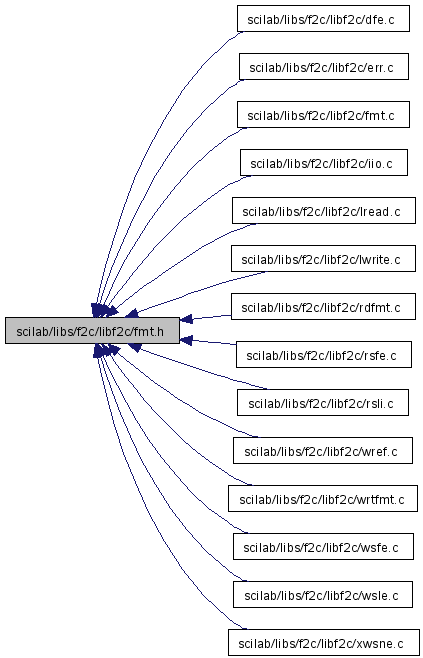
This graph shows which files directly or indirectly include this file:
Go to the source code of this file.
Data Structures | |
| struct | syl |
| union | ufloat |
| union | Uint |
Defines | |
| #define | RET1 1 |
| #define | REVERT 2 |
| #define | GOTO 3 |
| #define | X 4 |
| #define | SLASH 5 |
| #define | STACK 6 |
| #define | I 7 |
| #define | ED 8 |
| #define | NED 9 |
| #define | IM 10 |
| #define | APOS 11 |
| #define | H 12 |
| #define | TL 13 |
| #define | TR 14 |
| #define | T 15 |
| #define | COLON 16 |
| #define | S 17 |
| #define | SP 18 |
| #define | SS 19 |
| #define | P 20 |
| #define | BN 21 |
| #define | BZ 22 |
| #define | F 23 |
| #define | E 24 |
| #define | EE 25 |
| #define | D 26 |
| #define | G 27 |
| #define | GE 28 |
| #define | L 29 |
| #define | A 30 |
| #define | AW 31 |
| #define | O 32 |
| #define | NONL 33 |
| #define | OM 34 |
| #define | Z 35 |
| #define | ZM 36 |
| #define | Cextern extern |
| #define | GET(x) if((x=(*f__getn)())<0) return(x) |
| #define | VAL(x) (x!='\n'?x:' ') |
| #define | PUT(x) (*f__putn)(x) |
| #define | longint long |
Functions | |
| void | fmt_bg (void) |
| int | pars_f (char *) |
| int | rd_ed (struct syl *, char *, ftnlen) |
| int | rd_ned (struct syl *) |
| int | signbit_f2c (double *) |
| int | w_ed (struct syl *, char *, ftnlen) |
| int | w_ned (struct syl *) |
| int | wrt_E (ufloat *, int, int, int, ftnlen) |
| int | wrt_F (ufloat *, int, int, ftnlen) |
| int | wrt_L (Uint *, int, ftnlen) |
| Cextern char * | f__icvt (longint, int *, int *, int) |
Variables | |
| int | f__pc |
| int | f__parenlvl |
| int | f__revloc |
| int(* | f__doed )(struct syl *, char *, ftnlen) |
| int(*)(*) | f__doned (struct syl *) |
| int(*) | f__dorevert (void) |
| flag | f__cblank |
| flag | f__cplus |
| flag | f__workdone |
| flag | f__nonl |
| char * | f__fmtbuf |
| int | f__scale |
| #define A 30 |
Definition at line 35 of file fmt.h.
Referenced by C2F(), cc_test(), dgemm(), e_d(), example1(), intdgeesx(), intdsyev(), intihm(), intzgeesx(), LinearScaling2Colormap(), Real3::main(), Real1::main(), disp::main(), matmul(), mexFunction(), my_job(), out_call(), premier_exemple(), putentries(), rd_ed(), sci_xgetech(), type_f(), and w_ed().
| #define APOS 11 |
| #define AW 31 |
| #define D 26 |
Definition at line 31 of file fmt.h.
Referenced by C2F(), e_d(), getval(), Strings1::main(), Real3::main(), Real1::main(), Exemple5::main(), rd_ed(), type_f(), and w_ed().
| #define E 24 |
Definition at line 29 of file fmt.h.
Referenced by e_d(), getval(), Real3::main(), Real1::main(), rd_ed(), type_f(), w_ed(), and wr_common_decls().
| #define EE 25 |
| #define F 23 |
Definition at line 28 of file fmt.h.
Referenced by contourI(), ContourTrace(), e_d(), free(), GetDLLFilenameAtlas(), GetInfoCPUfromLine(), Real2::main(), Test::main(), malloc(), rd_ed(), sci_xgetech(), spf(), type_f(), and w_ed().
| #define G 27 |
Definition at line 32 of file fmt.h.
Referenced by C2F(), Callback_BACKGROUNDCOLOR(), Callback_TEXTCOLOR(), e_d(), FileInitFromScreenGif(), Real2::main(), rd_ed(), ReadRegistryTxt(), type_f(), and w_ed().
| #define GE 28 |
| #define H 12 |
Definition at line 17 of file fmt.h.
Referenced by cre_hmat(), create_index_vector(), get_hmat(), get_mat_as_hmat(), get_rhs_real_hmat(), intehm(), Jdoit(), Real2::main(), MultModM(), ne_d(), rd_ned(), reshape_hmat(), type_f(), and w_ned().
| #define I 7 |
Definition at line 12 of file fmt.h.
Referenced by AllocateBlockOfAllocationList(), CountMarkowitz(), csparsef(), doinclude(), e_d(), EnlargeMatrix(), GetSigD(), GetSigG(), MakeXImage(), MarkowitzProducts(), r8fix(), rd_ed(), SearchForSingleton(), spClear(), spCreate(), spLuget(), type_f(), and w_ed().
| #define IM 10 |
| #define L 29 |
Definition at line 34 of file fmt.h.
Referenced by __PARAMS(), argkludge(), asciitocode(), Axes3dStrings2(), axesplot(), AxesStrings(), axis_3ddraw(), axis_draw(), axis_draw2(), basout(), block_draw_rect_1(), block_draw_rect_2(), block_draw_rect_3(), boundingbox_1(), box3d(), C2F(), callXstringL(), ccheck(), champg(), check_win(), CheckDisplay(), checkXAxes2dTics(), checkYAxes2dTics(), ChooseDlgProc(), ChooseScilabDlgProc(), clipPolyLine(), cmatbptr(), cmatcptr(), cmatptr(), cmatsptr(), comlen(), computeArrowColor(), computeSuitableFont(), ConfigurePrinterDialogBox(), consnegop(), ConstructFigure(), contourI(), ContourTrace(), ConvertSelection(), Convex_Box(), coord_by_periodicity(), CopyPrint(), creadbmat(), creadchain(), creadchains(), creadcmat(), creadmat(), CreateEqualTList(), CreateFuncallTList(), CreateOperationTList(), createptr(), createstkptr(), curwin(), cwritebmat(), cwritechain(), cwritecmat(), cwritemat(), dbox(), DDEExecute(), decompInf(), decompSup(), delete_sgwin_entities(), displaynumbers_1(), do_p1_label(), drawArcEntity(), drawarcsXfig_old(), drawarrows_1(), drawarrowsPos(), DrawAxesBackground(), drawAxesEntity(), DrawAxis(), drawFecEntity(), drawFigureEntity(), drawGrayplotEntity(), drawLegendEntity(), DrawMark_Asterisk(), DrawMark_Cross(), DrawMark_FullDiamond(), DrawMark_FullDot(), DrawMark_FullPentagram(), DrawMark_FullSquare(), DrawMark_FullTriangleDown(), DrawMark_FullTriangleLeft(), DrawMark_FullTriangleRight(), DrawMark_FullTriangleUp(), DrawMark_Plus(), DrawMarks3D(), DrawMerge3d(), DrawNewMarks(), drawpolyline_1(), drawPolylineEntity(), drawpolylines_1(), drawpolymark(), drawpolymark_1(), drawPolyMarks(), drawRectangleEntity(), drawrectanglesPos(), drawrectanglesXfig(), drawsegments_1(), drawsegmentsPos(), drawSegsEntity(), drawStringInCell(), drawSubWinEntity(), drawSurfaceEntity(), drawTextEntity(), DrawXGrid(), DrawXSubTics(), DrawXTics(), DrawYGrid(), DrawYSubTics(), DrawYTics(), e_d(), equal_scistring_and_string(), errmsg(), ExportStyleDlgProc(), ExposeChooseWindow(), f_open(), fac3dn(), fakecrebmat(), fakecremat(), fillarcsPos(), fillarcsXfig_old(), fillpolyline_1(), fillpolylines_1(), fillpolylinesPos(), fillpolylinesXfig(), fold(), frame_clip_off(), frame_clip_on(), ftell64_(), ftell_(), get_cwindow_dims(), get_figure_size_property(), get_window_scale(), getcd(), GetCurrentFigureWindows(), GetGC(), getlengthchain(), getonepoly(), getpoly(), getrhssys(), GetScalarDouble(), GetScalarInt(), getStringBbox(), getStringsPositions(), getStringsRectSized(), getTicksLabelBox(), GetVal(), GraySquare1_base(), GraySquare1_NGreverse(), GraySquare_base(), GraySquareDirect(), GraySquareScaled(), GSciString(), I3dRotation(), icheck(), InsertFileNamed(), insmat(), intdsyev(), intopenxls(), intzgeesx(), lasterror(), lbit_bits(), Lcheck(), Legends(), Load(), look(), make_one_const(), MChoicePage(), MenuButtonProc(), MenuSelect(), mexCallSCI(), mexPrintf(), MissileGCget(), MissileGCset(), mkexpr(), mvfromto(), mxCreateCharMatrixFromStrings(), mxCreateData(), mxcreatefull(), mxCreateNumericMatrix(), mxcreatestring(), mxCreateString(), mxGetEps(), mxGetInf(), mxgetstring(), mxGetString(), newfec(), Objfec(), Objplot2d(), Objstring(), ON_ABOUT_WM_DESTROY(), ON_FILESASSOCIATIONBOX_WM_CLOSE(), ON_WND_GRAPH_WM_CLOSE(), ON_WND_PARENTGRAPH_WM_KILLFOCUS(), out_call(), p1comp_goto(), pad_common(), PaintTriangle(), parse(), plot(), plot3dn(), pmatj(), put_one_arg(), putlhsvar(), qbit_bits(), rd_ed(), Redisplay(), ResetFigureToDefaultValues(), run(), s_cat(), Sci_Axis(), sci_champ_G(), Sci_dlopen(), sci_driver(), sci_set(), sci_seteventhandler(), sci_show_window(), sci_xaxis(), sci_xchange(), sci_xclea(), sci_xclear(), sci_xclick(), sci_xdel(), sci_xend(), sci_xget(), sci_xgetech(), sci_xgetmouse(), sci_xinit(), sci_xlfont(), sci_xset(), sci_xsetech(), sci_xstringl(), SciAxisNew(), sciChamp2DRealToPixel(), sciClip(), scicosclip(), sciDrawInsideSegments(), SciDrawLines(), sciDrawOutsideSegment(), scig_2dzoom(), scig_3drot(), scig_erase(), scig_expose(), scig_loadsg(), scig_raise(), scig_replay(), scig_replay_hdc(), scig_resize(), scig_sel(), scig_toPs(), scig_unzoom(), scigerase(), sciGetCurrentScilabXgc(), sciGetScreenPosition(), sciInitDim(), sciInitMdlBackground(), sciInitMdlForeground(), sciInitResize(), sciInitScreenPosition(), sciInitUsedWindow(), sciInitXorMode(), sciIsExistingFigure(), scilab(), scilab_shade(), scilabgcgetGif(), scilabgcgetPos(), scilabgcgetXfig(), scilabgcsetGif(), scilabgcsetPos(), scilabgcsetXfig(), sciprint(), sciprint2(), sciprint_l(), sciprint_nd(), sciRedrawF(), sciSetColormap(), sciSetDefaultValues(), sciSetName(), Scisncr(), Scistring(), sciSwitchWindow(), sciUnClip(), sciwin(), SendCTRLandAKey(), SendGraphMacro(), SendScilab(), set_axes_size_property(), set_block_win(), set_figure_size_property(), set_scale(), set_slider_color(), set_window_scale(), SetEch3d1(), setthicknessXfig(), slider(), spf(), stcreate(), TDAxis(), TDdrawaxis(), test_click(), test_plot(), triedre(), type_f(), unzoom(), updateScale3d(), VTInitialize(), w_ed(), wavstopwrite(), wr_struct(), write_ioblocks(), Write_Scilab_Window(), XawVendorShellClassPartInit(), xclick_1(), xclick_2(), xclick_any_1(), XDrawAxisLine(), xgetmouse2(), xgetmouse_1(), xset_1(), xstringb_1(), YDrawAxisLine(), years_to_days(), zoom_get_rectangle(), and zoom_rect2().
| #define longint long |
Definition at line 95 of file fmt.h.
Referenced by l_write(), pow_qq(), qbit_bits(), qbit_cshift(), rd_I(), wrt_I(), and wrt_IM().
| #define O 32 |
| #define OM 34 |
| #define P 20 |
Definition at line 25 of file fmt.h.
Referenced by aawalk(), afwalk(), create_index_vector(), do_fio(), intehm(), luget1(), ne_d(), readline_win(), XmuAreaAnd(), and XmuAreaOrXor().
| #define REVERT 2 |
| #define S 17 |
Definition at line 22 of file fmt.h.
Referenced by cre_sparse_from_ptr_i(), do_fio(), GetDLLFilenameAtlas(), GetInfoCPUfromLine(), ne_d(), r8fix(), sci_xlfont(), and sci_xsort().
| #define SLASH 5 |
| #define STACK 6 |
| #define T 15 |
| #define TL 13 |
| #define TR 14 |
| #define X 4 |
Definition at line 9 of file fmt.h.
Referenced by C2F(), ClearLinesScreenConsole(), DrawMerge3d(), md5_process(), ne_d(), rd_ned(), sp(), type_f(), w_ned(), and xscimore().
| #define Z 35 |
Definition at line 40 of file fmt.h.
Referenced by C2F(), DrawMerge3d(), e_d(), rd_ed(), spf(), type_f(), w_ed(), XmuAreaAnd(), XmuAreaCopy(), XmuAreaOrXor(), XmuScanlineAnd(), XmuScanlineCopy(), XmuScanlineEqu(), XmuScanlineOr(), and XmuScanlineXor().
| #define ZM 36 |
Definition at line 19 of file fmtlib.c.
References buf, i, MAXINTLENGTH, and ulongint.
Referenced by lwrt_I(), wrt_I(), and wrt_IM().
00021 {
00022         static char buf[MAXINTLENGTH+1];
00023         register int i;
00024         ulongint uvalue;
00025
00026         if(value > 0) {
00027                 uvalue = value;
00028                 *sign = 0;
00029                 }
00030         else if (value < 0) {
00031                 uvalue = -value;
00032                 *sign = 1;
00033                 }
00034         else {
00035                 *sign = 0;
00036                 *ndigit = 1;
00037                 buf[MAXINTLENGTH-1] = '0';
00038                 return &buf[MAXINTLENGTH-1];
00039                 }
00040         i = MAXINTLENGTH;
00041         do {
00042                 buf[--i] = (char) ((uvalue%base) + '0');
00043                 uvalue /= base;
00044                 }
00045                 while(uvalue > 0);
00046         *ndigit = MAXINTLENGTH - i;
00047         return &buf[i];
00048         }
Here is the caller graph for this function:

| void fmt_bg | ( | void | ) |
| int pars_f | ( | char * | ) |
Definition at line 368 of file fmt.c.
Referenced by c_si(), s_rdfe(), s_rsfe(), s_wdfe(), and s_wsfe().
00370 {
00371         f__parenlvl=f__revloc=f__pc=0;
00372         if(f_s(s,0) == NULL)
00373         {
00374                 return(-1);
00375         }
00376         return(0);
00377 }
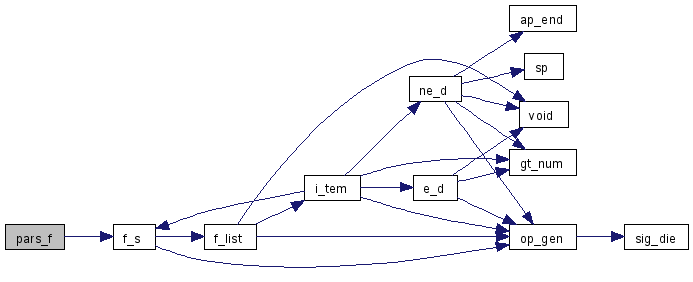
Here is the call graph for this function:
Here is the caller graph for this function:

Definition at line 526 of file rdfmt.c.
References APOS, f__cursor, f__donewrec, f__fmtbuf, f__recpos, H, p, rd_H(), rd_POS(), sig_die(), SLASH, T, TL, TR, and X.
Referenced by s_rdfe(), s_rsfe(), and s_rsfi().
00528 {
00529         switch(p->op)
00530         {
00531         default: fprintf(stderr,"rd_ned, unexpected code: %d\n", p->op);
00532                 sig_die(f__fmtbuf, 1);
00533         case APOS:
00534                 return(rd_POS(p->p2.s));
00535         case H: return(rd_H(p->p1,p->p2.s));
00536         case SLASH: return((*f__donewrec)());
00537         case TR:
00538         case X: f__cursor += p->p1;
00539                 return(1);
00540         case T: f__cursor=p->p1-f__recpos - 1;
00541                 return(1);
00542         case TL: f__cursor -= p->p1;
00543                 if(f__cursor < -f__recpos)      /* TL1000, 1X */
00544                         f__cursor = -f__recpos;
00545                 return(1);
00546         }
00547 }
Here is the call graph for this function:

Here is the caller graph for this function:

| int signbit_f2c | ( | double * | ) |
Definition at line 11 of file signbit.c.
References Long.
Referenced by l_g(), wrt_E(), and wrt_F().
00013 {
00014 #ifdef IEEE_MC68k
00015         if (*(Long*)x & 0x80000000)
00016                 return 1;
00017 #else
00018 #ifdef IEEE_8087
00019         if (((Long*)x)[1] & 0x80000000)
00020                 return 1;
00021 #endif /*IEEE_8087*/
00022 #endif /*IEEE_MC68k*/
00023         return 0;
00024         }
Here is the caller graph for this function:

Definition at line 350 of file wrtfmt.c.
References APOS, f__cursor, f__donewrec, f__fmtbuf, f__recpos, H, p, sig_die(), SLASH, T, TL, TR, wrt_AP(), wrt_H(), and X.
Referenced by s_wdfe(), s_wsfe(), and s_wsfi().
00352 {
00353         switch(p->op)
00354         {
00355         default: fprintf(stderr,"w_ned, unexpected code: %d\n", p->op);
00356                 sig_die(f__fmtbuf, 1);
00357         case SLASH:
00358                 return((*f__donewrec)());
00359         case T: f__cursor = p->p1-f__recpos - 1;
00360                 return(1);
00361         case TL: f__cursor -= p->p1;
00362                 if(f__cursor < -f__recpos)      /* TL1000, 1X */
00363                         f__cursor = -f__recpos;
00364                 return(1);
00365         case TR:
00366         case X:
00367                 f__cursor += p->p1;
00368                 return(1);
00369         case APOS:
00370                 return(wrt_AP(p->p2.s));
00371         case H:
00372                 return(wrt_H(p->p1,p->p2.s));
00373         }
00374 }
Here is the call graph for this function:

Here is the caller graph for this function:

Definition at line 25 of file wref.c.
References buf, CRAY, EXPMAXDIGS, f__cplus, f__scale, FMAX, i, int, p, PUT, s, sign, and signbit_f2c().
Referenced by w_ed(), and wrt_G().
00027 {
00028         char buf[FMAX+EXPMAXDIGS+4], *s, *se;
00029         int d1, delta, e1, i, sign, signspace;
00030         double dd;
00031 #ifdef WANT_LEAD_0
00032         int insert0 = 0;
00033 #endif
00034 #ifndef VAX
00035         int e0 = e;
00036 #endif
00037
00038         if(e <= 0)
00039                 e = 2;
00040         if(f__scale) {
00041                 if(f__scale >= d + 2 || f__scale <= -d)
00042                         goto nogood;
00043                 }
00044         if(f__scale <= 0)
00045                 --d;
00046         if (len == sizeof(real))
00047                 dd = p->pf;
00048         else
00049                 dd = p->pd;
00050         if (dd < 0.) {
00051                 signspace = sign = 1;
00052                 dd = -dd;
00053                 }
00054         else {
00055                 sign = 0;
00056                 signspace = (int)f__cplus;
00057 #ifndef VAX
00058                 if (!dd) {
00059 #ifdef SIGNED_ZEROS
00060                         if (signbit_f2c(&dd))
00061                                 signspace = sign = 1;
00062 #endif
00063                         dd = 0.;        /* avoid -0 */
00064                         }
00065 #endif
00066                 }
00067         delta = w - (2 /* for the . and the d adjustment above */
00068                         + 2 /* for the E+ */ + signspace + d + e);
00069 #ifdef WANT_LEAD_0
00070         if (f__scale <= 0 && delta > 0) {
00071                 delta--;
00072                 insert0 = 1;
00073                 }
00074         else
00075 #endif
00076         if (delta < 0) {
00077 nogood:
00078                 while(--w >= 0)
00079                         PUT('*');
00080                 return(0);
00081                 }
00082         if (f__scale < 0)
00083                 d += f__scale;
00084         if (d > FMAX) {
00085                 d1 = d - FMAX;
00086                 d = FMAX;
00087                 }
00088         else
00089                 d1 = 0;
00090         sprintf(buf,"%#.*E", d, dd);
00091 #ifndef VAX
00092         /* check for NaN, Infinity */
00093         if (!isdigit(buf[0])) {
00094                 switch(buf[0]) {
00095                         case 'n':
00096                         case 'N':
00097                                 signspace = 0;  /* no sign for NaNs */
00098                         }
00099                 delta = w - strlen(buf) - signspace;
00100                 if (delta < 0)
00101                         goto nogood;
00102                 while(--delta >= 0)
00103                         PUT(' ');
00104                 if (signspace)
00105                         PUT(sign ? '-' : '+');
00106                 for(s = buf; *s; s++)
00107                         PUT(*s);
00108                 return 0;
00109                 }
00110 #endif
00111         se = buf + d + 3;
00112 #ifdef GOOD_SPRINTF_EXPONENT /* When possible, exponent has 2 digits. */
00113         if (f__scale != 1 && dd)
00114                 sprintf(se, "%+.2d", atoi(se) + 1 - f__scale);
00115 #else
00116         if (dd)
00117                 sprintf(se, "%+.2d", atoi(se) + 1 - f__scale);
00118         else
00119                 strcpy(se, "+00");
00120 #endif
00121         s = ++se;
00122         if (e < 2) {
00123                 if (*s != '0')
00124                         goto nogood;
00125                 }
00126 #ifndef VAX
00127         /* accommodate 3 significant digits in exponent */
00128         if (s[2]) {
00129 #ifdef Pedantic
00130                 if (!e0 && !s[3])
00131                         for(s -= 2, e1 = 2; s[0] = s[1]; s++);
00132
00133         /* Pedantic gives the behavior that Fortran 77 specifies,       */
00134         /* i.e., requires that E be specified for exponent fields       */
00135         /* of more than 3 digits.  With Pedantic undefined, we get      */
00136         /* the behavior that Cray displays -- you get a bigger          */
00137         /* exponent field if it fits.   */
00138 #else
00139                 if (!e0) {
00140                         for(s -= 2, e1 = 2; s[0] = s[1]; s++)
00141 #ifdef CRAY
00142                                 delta--;
00143                         if ((delta += 4) < 0)
00144                                 goto nogood
00145 #endif
00146                                 ;
00147                         }
00148 #endif
00149                 else if (e0 >= 0)
00150                         goto shift;
00151                 else
00152                         e1 = e;
00153                 }
00154         else
00155  shift:
00156 #endif
00157                 for(s += 2, e1 = 2; *s; ++e1, ++s)
00158                         if (e1 >= e)
00159                                 goto nogood;
00160         while(--delta >= 0)
00161                 PUT(' ');
00162         if (signspace)
00163                 PUT(sign ? '-' : '+');
00164         s = buf;
00165         i = f__scale;
00166         if (f__scale <= 0) {
00167 #ifdef WANT_LEAD_0
00168                 if (insert0)
00169                         PUT('0');
00170 #endif
00171                 PUT('.');
00172                 for(; i < 0; ++i)
00173                         PUT('0');
00174                 PUT(*s);
00175                 s += 2;
00176                 }
00177         else if (f__scale > 1) {
00178                 PUT(*s);
00179                 s += 2;
00180                 while(--i > 0)
00181                         PUT(*s++);
00182                 PUT('.');
00183                 }
00184         if (d1) {
00185                 se -= 2;
00186                 while(s < se) PUT(*s++);
00187                 se += 2;
00188                 do PUT('0'); while(--d1 > 0);
00189                 }
00190         while(s < se)
00191                 PUT(*s++);
00192         if (e < 2)
00193                 PUT(s[1]);
00194         else {
00195                 while(++e1 <= e)
00196                         PUT('0');
00197                 while(*s)
00198                         PUT(*s++);
00199                 }
00200         return 0;
00201         }
Here is the call graph for this function:

Here is the caller graph for this function:

Definition at line 207 of file wref.c.
References b, buf, f__cplus, f__scale, MAXFRACDIGS, MAXINTDIGS, n, p, PUT, s, sign, signbit_f2c(), and x.
Referenced by w_ed(), and wrt_G().
00209 {
00210         int d1, sign, n;
00211         double x;
00212         char *b, buf[MAXINTDIGS+MAXFRACDIGS+4], *s;
00213
00214         x= (len==sizeof(real)?p->pf:p->pd);
00215         if (d < MAXFRACDIGS)
00216                 d1 = 0;
00217         else {
00218                 d1 = d - MAXFRACDIGS;
00219                 d = MAXFRACDIGS;
00220                 }
00221         if (x < 0.)
00222                 { x = -x; sign = 1; }
00223         else {
00224                 sign = 0;
00225 #ifndef VAX
00226                 if (!x) {
00227 #ifdef SIGNED_ZEROS
00228                         if (signbit_f2c(&x))
00229                                 sign = 2;
00230 #endif
00231                         x = 0.;
00232                         }
00233 #endif
00234                 }
00235
00236         if (n = f__scale)
00237                 if (n > 0)
00238                         do x *= 10.; while(--n > 0);
00239                 else
00240                         do x *= 0.1; while(++n < 0);
00241
00242 #ifdef USE_STRLEN
00243         sprintf(b = buf, "%#.*f", d, x);
00244         n = strlen(b) + d1;
00245 #else
00246         n = sprintf(b = buf, "%#.*f", d, x) + d1;
00247 #endif
00248
00249 #ifndef WANT_LEAD_0
00250         if (buf[0] == '0' && d)
00251                 { ++b; --n; }
00252 #endif
00253         if (sign == 1) {
00254                 /* check for all zeros */
00255                 for(s = b;;) {
00256                         while(*s == '0') s++;
00257                         switch(*s) {
00258                                 case '.':
00259                                         s++; continue;
00260                                 case 0:
00261                                         sign = 0;
00262                                 }
00263                         break;
00264                         }
00265                 }
00266         if (sign || f__cplus)
00267                 ++n;
00268         if (n > w) {
00269 #ifdef WANT_LEAD_0
00270                 if (buf[0] == '0' && --n == w)
00271                         ++b;
00272                 else
00273 #endif
00274                 {
00275                         while(--w >= 0)
00276                                 PUT('*');
00277                         return 0;
00278                         }
00279                 }
00280         for(w -= n; --w >= 0; )
00281                 PUT(' ');
00282         if (sign)
00283                 PUT('-');
00284         else if (f__cplus)
00285                 PUT('+');
00286         while(n = *b++)
00287                 PUT(n);
00288         while(--d1 >= 0)
00289                 PUT('0');
00290         return 0;
00291         }
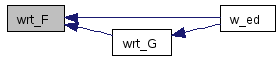
Here is the call graph for this function:

Here is the caller graph for this function:
Definition at line 228 of file wrtfmt.c.
References f__putn, i, n, and x.
Referenced by lwrt_L(), and w_ed().
00230 {       int i;
00231         long x;
00232         if(sizeof(long)==sz) x=n->il;
00233         else if(sz == sizeof(char)) x = n->ic;
00234         else x=n->is;
00235         for(i=0;i<len-1;i++)
00236                 (*f__putn)(' ');
00237         if(x) (*f__putn)('T');
00238         else (*f__putn)('F');
00239         return(0);
00240 }
Here is the caller graph for this function:

| int(*) f__dorevert(void) |
 1.5.1
1.5.1

