
#include <stdio.h>#include <string.h>#include <stdlib.h>#include <ctype.h>#include <stddef.h>#include <stdarg.h>#include "logger.h"#include "pldstr.h"#include "MALLOC.h"Include dependency graph for pldstr.c:
Go to the source code of this file.
Functions | |
| char * | PLD_strstr (char *haystack, char *needle, int insensitive) |
| char * | PLD_strncpy (char *dst, const char *src, size_t len) |
| char * | PLD_strncat (char *dst, const char *src, size_t len) |
| char * | PLD_strncate (char *dst, const char *src, size_t len, char *endpoint) |
| int | PLD_strncasecmp (char *s1, char *s2, int n) |
| char * | PLD_strtok (struct PLD_strtok *st, char *line, char *delimeters) |
| int | PLD_strlower (unsigned char *convertme) |
| char * | PLD_strreplace_general (struct PLD_strreplace *replace_details) |
| char * | PLD_strreplace (char **source, char *searchfor, char *replacewith, int replacenumber) |
| char * | PLD_dprintf (const char *format,...) |
| char* PLD_dprintf | ( | const char * | format, | |
| ... | ||||
| ) |
Definition at line 725 of file pldstr.c.
References FREE, MALLOC, n, NULL, p, REALLOC, size, and vsnprintf().
Referenced by OLE_decode_stream(), OLE_store_stream(), OLEUNWRAP_decode_attachment(), and OLEUNWRAP_save_stream().
00726 {
00727   int n, size = 1024; /* Assume we don't need more than 1K to start with*/
00728         char *p;
00729         va_list ap;
00730
00731         /* Attempt to allocate and then check */
00732         p = MALLOC(size *sizeof(char));
00733         if (p == NULL) return NULL;
00734
00735         while (1)
00736         {
00737           /* Attempt to print out string out into the allocated space*/
00738                 va_start(ap, format);
00739
00740                 n = vsnprintf (p, size, format, ap);
00741                 va_end(ap);
00742
00743                 /* If things went well, then return the new string*/
00744                 if ((n > -1) && (n < size)) return p;
00745
00746                 /* If things didn't go well, then we have to allocate more space*/
00747                 /*      based on which glibc we're using ( fortunately, the return codes*/
00748                 /*      tell us which glibc is being used! *phew**/
00749
00750                 /* If n > -1, then we're being told precisely how much space we need*/
00751                 /* else (older glibc) we have to just guess again ...*/
00752
00753                 if (n > -1) size = n+1; /* Allocate precisely what is needed*/
00754                 else size *= 2;  /* Double the amount allocated, note, we could just increase by 1K, but if we have a long string, we'd end up using a lot of realloc's*/
00755
00756                 /* We could just realloc 'blind', but that'd be wrong and potentially cause a DoS, so*/
00757                 /*      instead, we'll be good and first attempt to realloc to a temp variable then, if all*/
00758                 /*      is well, we go ahead and update*/
00759                 if (1)
00760                 {
00761                         char *tmp_p;
00762
00763                         tmp_p = REALLOC(p, size);
00764                         if (tmp_p == NULL){ if (p != NULL) FREE(p); return NULL; }
00765                         else p = tmp_p;
00766                 }
00767         }
00768
00769 }
Here is the call graph for this function:

Here is the caller graph for this function:

| int PLD_strlower | ( | unsigned char * | convertme | ) |
Definition at line 366 of file pldstr.c.
Referenced by PLD_strstr().
00367 {
00368
00369   /* Updates:*/
00370   /*    09-11-2002 - changed from 'char *' to 'unsigned char *' to deal with*/
00371   /*            non-ASCII characters ( ie, french ).  Pointed out by Emmanuel Collignon*/
00372
00373         char *c = convertme;
00374
00375         while ( *c != '\0') {*c = tolower((int)*c); c++;}
00376
00377         return 0;
00378 }
Here is the caller graph for this function:

Definition at line 234 of file pldstr.c.
00235 {
00236         char *ds1 = s1, *ds2 = s2;
00237         char c1, c2;
00238         int result = 0;
00239
00240         while(n > 0)
00241         {
00242                 c1 = tolower(*ds1);
00243                 c2 = tolower(*ds2);
00244
00245                 if (c1 == c2)
00246                 {
00247                         n--;
00248                         ds1++;
00249                         ds2++;
00250                 }
00251                 else
00252                 {
00253                         result = c2 - c1;
00254                         n = 0;
00255                 }
00256
00257         }
00258
00259         return result;
00260
00261 }
| char* PLD_strncat | ( | char * | dst, | |
| const char * | src, | |||
| size_t | len | |||
| ) |
Definition at line 127 of file pldstr.c.
References sp().
00128 {
00129         char *dp = dst;
00130         const char *sp = src;
00131         size_t cc;
00132
00133         if (len == 0) return dst;
00134
00135         len--;
00136
00137         /* Locate the end of the current string.*/
00138         cc = 0;
00139         while ((*dp)&&(cc < len)) { dp++; cc++; }
00140
00141         /* If we have no more buffer space, then return the destination*/
00142
00143         if (cc >= len) return dst;
00144
00145         /* While we have more source, and there's more char space left in the buffer*/
00146
00147         while ((*sp)&&(cc < len))
00148         {
00149                 cc++;
00150                 *dp = *sp;
00151                 dp++;
00152                 sp++;
00153         }
00154
00155         /* Terminate dst, as a gaurantee of string ending.*/
00156
00157         *dp = '\0';
00158
00159         return dst;
00160 }
Here is the call graph for this function:

| char* PLD_strncate | ( | char * | dst, | |
| const char * | src, | |||
| size_t | len, | |||
| char * | endpoint | |||
| ) |
Definition at line 176 of file pldstr.c.
References sp().
00177 {
00178         char *dp = dst;
00179         const char *sp = src;
00180         size_t cc = 0;
00181
00182         if (len == 0) return dst;
00183
00184         len--;
00185
00186         /* If endpoint does not relate correctly, then force manual detection*/
00187         /* of the endpoint.*/
00188
00189         if ((!endpoint)||(endpoint == dst)||((endpoint -dst +1)>(int)len))
00190         {
00191           /* Locate the end of the current string.*/
00192                 cc = 0;
00193                 while ((*dp != '\0')&&(cc < len)) { dp++; cc++; }
00194         }
00195         else {
00196                 cc = endpoint -dst +1;
00197                 dp = endpoint;
00198         }
00199
00200         /* If we have no more buffer space, then return the destination*/
00201
00202         if (cc >= len) return dst;
00203
00204         /* While we have more source, and there's more char space left in the buffer*/
00205
00206         while ((*sp)&&(cc < len))
00207         {
00208                 cc++;
00209                 *dp = *sp;
00210                 dp++;
00211                 sp++;
00212         }
00213
00214         /* Terminate dst, as a gaurantee of string ending.*/
00215
00216         *dp = '\0';
00217
00218         return dst;
00219 }
Here is the call graph for this function:

| char* PLD_strncpy | ( | char * | dst, | |
| const char * | src, | |||
| size_t | len | |||
| ) |
Definition at line 82 of file pldstr.c.
00083 {
00084
00085   /* Thanks go to 'defrost' of #c for providing the replacement*/
00086   /*            code which you now see here.  It covers the errors better*/
00087   /*            than my own previous code.*/
00088
00089   /* If we have no buffer space, then it's futile attempting*/
00090   /*            to copy anything, just return NULL*/
00091         if (len==0) return NULL;
00092
00093         /* Providing our destination pointer isn't NULL, we can*/
00094         /*              commence copying data across*/
00095
00096         if (dst)
00097         {
00098                 char *dp = dst;
00099
00100                 /* If our source string exists, start moving it to the*/
00101                 /*              destination string character at a time.*/
00102                 if (src)
00103                 {
00104                         char *sp = (char *)src;
00105                         while ((--len)&&(*sp)) { *dp=*sp; dp++; sp++; }
00106                 }
00107
00108                 *dp='\0';
00109         }
00110
00111         return dst;
00112 }
Here is the call graph for this function:

| char* PLD_strreplace | ( | char ** | source, | |
| char * | searchfor, | |||
| char * | replacewith, | |||
| int | replacenumber | |||
| ) |
Definition at line 685 of file pldstr.c.
References PLD_strreplace::insensitive, NULL, PLD_strreplace_general(), PLD_strreplace::postexist, PLD_strreplace::preexist, PLD_strreplace::replacenumber, PLD_strreplace::replacewith, PLD_strreplace::searchfor, and PLD_strreplace::source.
00686 {
00687         struct PLD_strreplace replace_details;
00688         char *tmp_source;
00689
00690         replace_details.source = *source;
00691         replace_details.searchfor = searchfor;
00692         replace_details.replacewith = replacewith;
00693         replace_details.replacenumber = replacenumber;
00694         replace_details.preexist = NULL;
00695         replace_details.postexist = NULL;
00696         replace_details.insensitive = 0;
00697
00698         tmp_source = PLD_strreplace_general( &replace_details );
00699
00700         if (tmp_source != *source) *source = tmp_source;
00701
00702         return *source;
00703 }
Here is the call graph for this function:

| char* PLD_strreplace_general | ( | struct PLD_strreplace * | replace_details | ) |
Definition at line 403 of file pldstr.c.
References FL, FREE, PLD_strreplace::insensitive, LOGGER_log(), MALLOC, NULL, p, PLD_strstr(), PLD_strreplace::postexist, PLD_strreplace::preexist, PLD_strreplace::replacenumber, PLD_strreplace::replacewith, PLD_strreplace::searchfor, and PLD_strreplace::source.
Referenced by PLD_strreplace().
00404 {
00405         char *new_buffer=NULL;
00406         char *source_end;
00407         char *segment_start, *segment_end, *segment_p;
00408         char *new_p;
00409         char *preexist_location=NULL;
00410         char *postexist_location=NULL;
00411         int replace_count=0;
00412         int size_required;
00413         int size_difference;
00414         int source_length;
00415         int searchfor_length;
00416         int replacewith_length;
00417         int segment_ok;
00418
00419         if (replace_details->source == NULL) return NULL;
00420
00421         source_length = strlen( replace_details->source );
00422         source_end = replace_details->source +source_length;
00423         searchfor_length = strlen(replace_details->searchfor);
00424         replacewith_length = strlen(replace_details->replacewith);
00425         size_difference = replacewith_length -searchfor_length;
00426         size_required = source_length;
00427         replace_count = replace_details->replacenumber;
00428
00429         if ((replace_details->preexist != NULL)&&(strlen(replace_details->preexist) < 1)) replace_details->preexist = NULL;
00430         if ((replace_details->postexist != NULL)&&(strlen(replace_details->postexist) < 1)) replace_details->postexist = NULL;
00431
00432         /* If we have a 'pre-exist' request, then we need to check this out first*/
00433         /*              because if the pre-exist string cannot be found, then there's very*/
00434         /*              little point us continuing on in our search ( because without the*/
00435         /*              preexist string existing, we are thus not qualified to replace anything )*/
00436         if (replace_details->preexist != NULL)
00437         {
00438                 preexist_location = PLD_strstr(replace_details->source, replace_details->preexist, replace_details->insensitive);
00439                 if (preexist_location == NULL)
00440                 {
00441                         return replace_details->source;
00442                 }
00443         }
00444
00445         /* Determine if initial POSTexist tests will pass, if we don't pick up*/
00446         /*              anything here, then there's no point in continuing either*/
00447         if (replace_details->postexist != NULL)
00448         {
00449                 char *p = replace_details->source;
00450                 postexist_location = NULL;
00451                 do {
00452                         p = PLD_strstr(p, replace_details->postexist, replace_details->insensitive);
00453                         if (p != NULL)
00454                         {
00455                                 postexist_location = p;
00456                                 p = p +strlen(replace_details->postexist);
00457                         }
00458                 } while (p != NULL);
00459
00460                 if (postexist_location == NULL)
00461                 {
00462                         return replace_details->source;
00463                 }
00464         }
00465
00466
00467         /* Step 1 - determine the MAXIMUM number of times we might have to replace this string ( or the limit*/
00468         /*              set by replacenumber*/
00469
00470         /*      Note - we only need this number if the string we're going to be inserting into the */
00471         /*      source is larger than the one we're replacing - this is so that we can ensure that*/
00472         /*      we have sufficient memory available in the buffer.*/
00473         if (size_difference > 0)
00474         {
00475                 if (replace_count == 0)
00476                 {
00477                         char *p, *q;
00478
00479                         p = replace_details->source;
00480                         q = PLD_strstr(p, replace_details->searchfor, replace_details->insensitive);
00481                         while (q != NULL)
00482                         {
00483                                 replace_count++;
00484                                 /*size_required += size_difference;*/
00485                                 p = q +searchfor_length;
00486                                 q = PLD_strstr(p, replace_details->searchfor, replace_details->insensitive);
00487                         }
00488
00489                 }
00490                 size_required = source_length +(size_difference *replace_count) +1;
00491         } else size_required = source_length +1;
00492
00493
00494         /* Allocate the memory required to hold the new string [at least], check to see that*/
00495         /*              all went well, if not, then return an error*/
00496         new_buffer = MALLOC( sizeof(char) *size_required);
00497         if (new_buffer == NULL)
00498         {
00499                 LOGGER_log("%s:%d:PLD_strreplace:ERROR: Cannot allocate %d bytes of memory to perform replacement operation", FL, size_required);
00500                 return replace_details->source;
00501         }
00502
00503         /* Our segment must always start at the beginning of the source, */
00504         /*              on the other hand, the segment_end can be anything from the*/
00505         /*              next byte to NULL ( which is specially treated to mean to */
00506         /*              the end of the source )*/
00507         segment_start = replace_details->source;
00508
00509
00510         /* Locate the first segment */
00511         segment_ok = 0;
00512         segment_end = PLD_strstr(replace_details->source, replace_details->searchfor, replace_details->insensitive);
00513
00514         /* Determine if the first segment is valid in the presence of the */
00515         /*      pre-exist and post-exist requirements*/
00516         while ((segment_end != NULL)&&(segment_ok == 0)\
00517                         &&((replace_details->preexist != NULL)||(replace_details->postexist != NULL)))
00518         {
00519                 int pre_ok = 0;
00520                 int post_ok = 0;
00521
00522                 /* The PREexist test assumes a couple of factors - please ensure these are*/
00523                 /*              relevant if you change any code prior to this point.*/
00524                 /*      */
00525                 /*      1. preexist_location has already been computed and is not NULL*/
00526
00527                 /*      2. By relative position, the first preexist_location will be a valid location*/
00528                 /*                      on which to validate for ALL replacements beyond that point, thus, we*/
00529                 /*                      never actually have to recompute preexist_location again.*/
00530
00531                 /* 3. Conversely, the last computed postexist_location is valid for all */
00532                 /*                      matches before it*/
00533
00534                 if (preexist_location == NULL) pre_ok = 1;
00535                 else if (preexist_location < segment_end){ pre_ok = 1;}
00536
00537                 if (postexist_location == NULL) post_ok = 1;
00538                 else if (postexist_location > segment_end){ post_ok = 1;}
00539
00540                 if ((pre_ok == 0)||(post_ok == 0)) { segment_end = PLD_strstr(segment_end +searchfor_length, replace_details->searchfor, replace_details->insensitive); }
00541                 else segment_ok = 1;
00542         }
00543
00544         segment_p = segment_start;
00545         new_p = new_buffer;
00546         while (segment_start != NULL)
00547         {
00548                 int replacewith_count;
00549                 char *replacewith_p;
00550
00551                 if (segment_end == NULL) segment_end = source_end;
00552
00553                 replace_count--;
00554
00555                 /* Perform the segment copy*/
00556                 segment_p = segment_start;
00557                 while ((segment_p < segment_end)&&(size_required > 0))
00558                 {
00559                         *new_p = *segment_p;
00560                         new_p++;
00561                         segment_p++;
00562                         size_required--;
00563                 }
00564
00565                 /* Perform the string replacement*/
00566                 if (segment_end < source_end)
00567                 {
00568                         replacewith_count = replacewith_length;
00569                         replacewith_p = replace_details->replacewith;
00570                         while ((replacewith_count--)&&(size_required > 0))
00571                         {
00572                                 *new_p = *replacewith_p;
00573                                 new_p++;
00574                                 replacewith_p++;
00575                                 size_required--;
00576                         }
00577                 }
00578
00579                 if (size_required < 1 )
00580                 {
00581                         LOGGER_log("%s:%d:PLD_strreplace_general: Allocated memory ran out while replacing '%s' with '%s'",FL, replace_details->searchfor, replace_details->replacewith);
00582                         *new_p='\0';
00583                         break;
00584                 }
00585
00586                 /* Find the next segment*/
00587                 segment_start = segment_end +searchfor_length;
00588
00589                 /* If we've reached the end of the number of replacements we're supposed*/
00590                 /*              to do, then we prepare the termination of the while loop by setting*/
00591                 /*              our segment end to the end of the source.*/
00592
00593                 /* NOTE: Remember that the replace_count is pre-decremented at the start*/
00594                 /*              of the while loop, so, if the caller requested '0' replacements*/
00595                 /*              this will now be -1, thus, it won't get terminated from this == 0*/
00596                 /*              match.  Just thought you'd like to be reminded of that incase you*/
00597                 /*              were wondering "Huh? this would terminate an unlimited replacement"*/
00598                 if (replace_count == 0)
00599                 {
00600                         segment_end = NULL;
00601                 } else {
00602                   /* If our new segment to copy starts after the*/
00603                   /*            end of the source, then we actually have */
00604                   /*            nothing else to copy, thus, we prepare the*/
00605                   /*            segment_start varible to cause the while loop */
00606                   /*            to terminate.*/
00607
00608                   /* Otherwise, we try and locate the next segment*/
00609                   /*            ending point, and set the starting point to*/
00610                   /*            be on the 'other side' of the 'searchfor' string*/
00611                   /*            which we found in the last search.*/
00612
00613                         if (segment_start > source_end)
00614                         {
00615                                 segment_start = NULL;
00616                         } else {
00617
00618                           /* Try find the next segment*/
00619                                 segment_ok = 0;
00620                                 segment_end = PLD_strstr(segment_end +searchfor_length, replace_details->searchfor, replace_details->insensitive);
00621
00622                                 /* If we have a pre/post-exist requirement, then enter into this*/
00623                                 /*              series of tests.  NOTE - at least one of the pre or post tests*/
00624                                 /*              must fire to give an meaningful result - else we'll end up with */
00625                                 /*              a loop which simply goes to the end of the searchspace buffer*/
00626                                 while ((segment_end != NULL)&&(segment_ok == 0)\
00627                                                 &&((replace_details->preexist != NULL)||(replace_details->postexist != NULL)))
00628                                 {
00629                                         int pre_ok = 0;
00630                                         int post_ok = 0;
00631
00632                                         /* The PREexist test assumes a couple of factors - please ensure these are*/
00633                                         /*              relevant if you change any code prior to this point.*/
00634                                         /*      */
00635                                         /*      1. preexist_location has already been computed and is not NULL*/
00636
00637                                         /*      2. By relative position, the first preexist_location will be a valid location*/
00638                                         /*                      on which to validate for ALL replacements beyond that point, thus, we*/
00639                                         /*                      never actually have to recompute preexist_location again.*/
00640
00641                                         /* 3. Conversely, the last computed postexist_location is valid for all */
00642                                         /*                      matches before it*/
00643
00644                                         if (preexist_location == NULL) pre_ok = 1;
00645                                         else if (preexist_location < segment_end){ pre_ok = 1;}
00646
00647                                         if (postexist_location == NULL) post_ok = 1;
00648                                         else if (postexist_location > segment_end){ post_ok = 1;}
00649
00650                                         if ((pre_ok == 0)||(post_ok == 0)) { segment_end = PLD_strstr(segment_end +searchfor_length, replace_details->searchfor, replace_details->insensitive); }
00651                                         else segment_ok = 1;
00652                                 }
00653
00654                         } /* If-else segment_start > source_end*/
00655
00656                 }
00657
00658         }
00659
00660         *new_p = '\0';
00661
00662         if (replace_details->source != NULL) FREE (replace_details->source);
00663         replace_details->source = new_buffer;
00664         return new_buffer;
00665 }
Here is the call graph for this function:
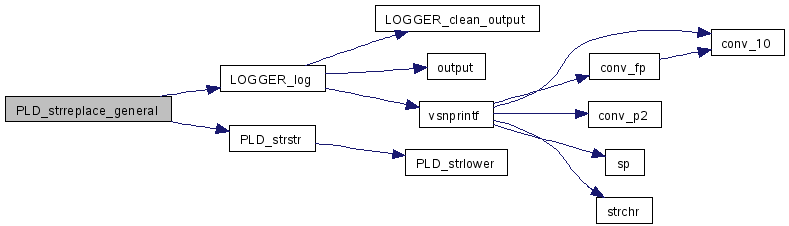
Here is the caller graph for this function:

| char* PLD_strstr | ( | char * | haystack, | |
| char * | needle, | |||
| int | insensitive | |||
| ) |
Definition at line 37 of file pldstr.c.
References FREE, ne, NULL, PLD_strlower(), and result.
Referenced by PLD_strreplace_general().
00038 {
00039         char *hs, *ne;
00040         char *result;
00041
00042         /*      LOGGER_log("%s:%d:\nHS=%s\nNE=%s\nIS=%d\n",FL, haystack, needle, insensitive );*/
00043
00044         if (insensitive > 0)
00045         {
00046                 hs = strdup(haystack);
00047                 PLD_strlower(hs);
00048                 ne = strdup(needle);
00049                 PLD_strlower(ne);
00050         } else {
00051                 hs = haystack;
00052                 ne = needle;
00053         }
00054
00055         result = strstr(hs, ne);
00056         /*      if (result) LOGGER_log("%s:%d:HIT: %s",FL, result);*/
00057         /*      else LOGGER_log("%s:%d:MISS (looking for %s|%s)",FL, needle,ne);*/
00058
00059         if ((result != NULL)&&(insensitive > 0))
00060         {
00061                 result = result -hs +haystack;
00062                 FREE(hs);
00063                 FREE(ne);
00064
00065                 /*              LOGGER_log("%s:%d:HIT - %s",FL, result );*/
00066         }
00067
00068         return result;
00069 }
Here is the call graph for this function:

Here is the caller graph for this function:

| char* PLD_strtok | ( | struct PLD_strtok * | st, | |
| char * | line, | |||
| char * | delimeters | |||
| ) |
Definition at line 274 of file pldstr.c.
References PLD_strtok::delimeter, NULL, result, and PLD_strtok::start.
00275 {
00276         char *stop;
00277         char *dc;
00278         char *result = NULL;
00279
00280         if ( line )
00281         {
00282                 st->start = line;
00283         }
00284
00285         /*Strip off any leading delimeters*/
00286
00287         dc = delimeters;
00288         while ((st->start)&&(*dc != '\0'))
00289         {
00290                 if (*dc == *(st->start))
00291                 {
00292                         st->start++;
00293                         dc = delimeters;
00294                 }
00295                 else dc++;
00296         }
00297
00298         /* Where we are left, is the start of our token.*/
00299
00300         result = st->start;
00301
00302         if ((st->start)&&(st->start != '\0'))
00303         {
00304                 stop = strpbrk( st->start, delimeters ); /* locate our next delimeter */
00305
00306                 /* If we found a delimeter, then that is good.  We must now break the string here*/
00307                 /* and don't forget to store the character which we stopped on.  Very useful bit*/
00308                 /* of information for programs which process expressions.*/
00309
00310                 if (stop)
00311                 {
00312
00313                   /* Store our delimeter.*/
00314
00315                         st->delimeter = *stop;
00316
00317                         /* Terminate our token.*/
00318
00319                         *stop = '\0';
00320
00321
00322                         /* Because we're emulating strtok() behaviour here, we have to*/
00323                         /* absorb all the concurrent delimeters, that is, unless we*/
00324                         /* reach the end of the string, we cannot return a string with*/
00325                         /* no chars.*/
00326
00327                         stop++;
00328                         dc = delimeters;
00329                         while (*dc != '\0')
00330                         {
00331                                 if (*dc == *stop)
00332                                 {
00333                                         stop++;
00334                                         dc = delimeters;
00335                                 }
00336                                 else dc++;
00337                         } /* While*/
00338
00339                         if (*stop == '\0') st->start = NULL;
00340                         else st->start = stop;
00341
00342                 }
00343                 else {
00344                         st->start = NULL;
00345                         st->delimeter = '\0';
00346                 }
00347         }
00348         else  {
00349                 st->start = NULL;
00350                 result = NULL;
00351         }
00352
00353
00354         return result;
00355 }
 1.5.1
1.5.1