
#include "defs.h"#include "tokdefs.h"#include "p1defs.h"Include dependency graph for lex.c:
Go to the source code of this file.
Data Structures | |
| struct | comment_buf |
| struct | Inclfile |
| struct | Keylist |
| struct | Punctlist |
| struct | Fmtlist |
| struct | Dotlist |
Defines | |
| #define | EOF_CHAR 26 |
| #define | BLANK ' ' |
| #define | MYQUOTE (2) |
| #define | SEOF 0 |
| #define | STEOF 1 |
| #define | STINITIAL 2 |
| #define | STCONTINUE 3 |
| #define | NEWSTMT 1 |
| #define | FIRSTTOKEN 2 |
| #define | OTHERTOKEN 3 |
| #define | RETEOS 4 |
| #define | USC (unsigned char *) |
| #define | isalnum_(x) anum_buf[x] |
| #define | isalpha_(x) (anum_buf[x] == 1) |
| #define | COMMENT_BUF_STORE 4088 |
Functions | |
| static void flush_comments | Argdcl ((void)) |
| static void | putlineno (Void) |
| static int getcd | Argdcl ((char *, int)) |
| static void store_comment | Argdcl ((char *)) |
| int | inilex (char *name) |
| void | flline (Void) |
| char * | lexline (int *n) |
| void | doinclude (char *name) |
| LOCAL int | popinclude (Void) |
| void | p1_line_number (long line_number) |
| int | yylex (Void) |
| LOCAL void | contmax (Void) |
| LOCAL int | getcds (Void) |
| static void | bang (char *a, char *b, char *c, register char *d, register char *e) |
| LOCAL int | getcd (register char *b, int nocont) |
| LOCAL void | adjtoklen (int newlen) |
| LOCAL void | crunch (Void) |
| LOCAL void | analyz (Void) |
| LOCAL int | getkwd (Void) |
| void | initkey (Void) |
| LOCAL int | hexcheck (int key) |
| LOCAL int | gettok (Void) |
| static void | store_comment (char *str) |
| static void | flush_comments (Void) |
| void | unclassifiable (Void) |
| void | endcheck (Void) |
Variables | |
| LOCAL int | stkey |
| static int | needwkey |
| ftnint | yystno |
| flag | intonly |
| int | new_dcl |
| LOCAL long int | stno |
| LOCAL long int | nxtstno |
| LOCAL int | parlev |
| LOCAL int | parseen |
| LOCAL int | expcom |
| LOCAL int | expeql |
| LOCAL char * | nextch |
| LOCAL char * | lastch |
| LOCAL char * | nextcd = NULL |
| LOCAL char * | endcd |
| LOCAL long | prevlin |
| LOCAL long | thislin |
| LOCAL int | code |
| LOCAL int | lexstate = NEWSTMT |
| LOCAL char * | sbuf |
| LOCAL char * | send |
| LOCAL char * | shend |
| LOCAL int | maxcont |
| LOCAL int | nincl = 0 |
| LOCAL long | firstline |
| LOCAL char * | infname1 |
| LOCAL char * | infname2 |
| LOCAL char * | laststb |
| LOCAL char * | stb0 |
| int | addftnsrc |
| static char ** | linestart |
| LOCAL int | ncont |
| LOCAL char | comstart [Table_size] |
| static char | anum_buf [Table_size] |
| static comment_buf * | cbfirst |
| static comment_buf * | cbcur |
| static char * | cbinit |
| static char * | cbnext |
| static char * | cblast |
| flag | use_bs |
| static char * | lastfile = "??" |
| static char * | lastfile0 = "?" |
| static char | fbuf [P1_FILENAME_MAX] |
| static long | lastline |
| LOCAL struct Inclfile * | inclp = NULL |
| LOCAL struct Keylist * | keystart [26] |
| LOCAL struct Keylist * | keyend [26] |
| static struct Punctlist | puncts [] |
| LOCAL struct Dotlist | dots [] |
| LOCAL struct Keylist | keys [] |
| LOCAL char * | stbuf [3] |
| #define COMMENT_BUF_STORE 4088 |
| #define MYQUOTE (2) |
| #define RETEOS 4 |
| #define USC (unsigned char *) |
| LOCAL void adjtoklen | ( | int | newlen | ) |
Definition at line 1055 of file lex.c.
References maxtoklen, realloc(), and token.
Referenced by crunch().
01057 {
01058         while(maxtoklen < newlen)
01059                 maxtoklen = 2*maxtoklen + 2;
01060         if (token = (char *)realloc(token, maxtoklen))
01061                 return;
01062         fprintf(stderr, "adjtoklen: realloc(%d) failure!\n", maxtoklen);
01063         exit(2);
01064         }
Here is the call graph for this function:

Here is the caller graph for this function:

| LOCAL void analyz | ( | Void | ) |
Definition at line 1210 of file lex.c.
References err, expcom, expeql, getkwd(), i, isalpha_, lastch, MYQUOTE, needwkey, nextch, parlev, parseen, SARITHIF, SASGOTO, sbuf, SCOMPGOTO, SDO, SGOTO, SLET, SLOGIF, stkey, SUNKNOWN, and USC.
Referenced by yylex().
01211 {
01212         register char *i;
01213
01214         if(parlev != 0)
01215         {
01216                 err("unbalanced parentheses, statement skipped");
01217                 stkey = SUNKNOWN;
01218                 lastch = sbuf - 1; /* prevent double error msg */
01219                 return;
01220         }
01221         if(nextch+2<=lastch && nextch[0]=='i' && nextch[1]=='f' && nextch[2]=='(')
01222         {
01223                 /* assignment or if statement -- look at character after balancing paren */
01224                 parlev = 1;
01225                 for(i=nextch+3 ; i<=lastch; ++i)
01226                         if(*i == (MYQUOTE))
01227                         {
01228                                 while(*++i != MYQUOTE)
01229                                         ;
01230                         }
01231                         else if(*i == '(')
01232                                 ++parlev;
01233                         else if(*i == ')')
01234                         {
01235                                 if(--parlev == 0)
01236                                         break;
01237                         }
01238                 if(i >= lastch)
01239                         stkey = SLOGIF;
01240                 else if(i[1] == '=')
01241                         stkey = SLET;
01242                 else if( isdigit(i[1]) )
01243                         stkey = SARITHIF;
01244                 else    stkey = SLOGIF;
01245                 if(stkey != SLET)
01246                         nextch += 2;
01247         }
01248         else if(expeql) /* may be an assignment */
01249         {
01250                 if(expcom && nextch<lastch &&
01251                     nextch[0]=='d' && nextch[1]=='o')
01252                 {
01253                         stkey = SDO;
01254                         nextch += 2;
01255                 }
01256                 else    stkey = SLET;
01257         }
01258         else if (parseen && nextch + 7 < lastch
01259                         && nextch[2] != 'u' /* screen out "double..." early */
01260                         && nextch[0] == 'd' && nextch[1] == 'o'
01261                         && ((nextch[2] >= '0' && nextch[2] <= '9')
01262                                 || nextch[2] == ','
01263                                 || nextch[2] == 'w'))
01264                 {
01265                 stkey = SDO;
01266                 nextch += 2;
01267                 needwkey = 1;
01268                 }
01269         /* otherwise search for keyword */
01270         else    {
01271                 stkey = getkwd();
01272                 if(stkey==SGOTO && lastch>=nextch)
01273                         if(nextch[0]=='(')
01274                                 stkey = SCOMPGOTO;
01275                         else if(isalpha_(* USC nextch))
01276                                 stkey = SASGOTO;
01277         }
01278         parlev = 0;
01279 }
Here is the call graph for this function:

Here is the caller graph for this function:

| static void store_comment Argdcl | ( | (char *) | ) | [static] |
| static void flush_comments Argdcl | ( | (void) | ) | [static] |
| static void bang | ( | char * | a, | |
| char * | b, | |||
| char * | c, | |||
| register char * | d, | |||
| register char * | e | |||
| ) | [static] |
Definition at line 671 of file lex.c.
References buf, COMMENT_BUFFER_SIZE, p, and store_comment().
Referenced by crunch(), and getcd().
00674 {
00675         char buf[COMMENT_BUFFER_SIZE + 1];
00676         register char *p, *pe;
00677
00678         p = buf;
00679         pe = buf + COMMENT_BUFFER_SIZE;
00680         *pe = 0;
00681         while(a < b)
00682                 if (!(*p++ = *a++))
00683                         p[-1] = 0;
00684         if (b < c)
00685                 *p++ = '\t';
00686         while(d < e) {
00687                 if (!(*p++ = *d++))
00688                         p[-1] = ' ';
00689                 if (p == pe) {
00690                         store_comment(buf);
00691                         p = buf;
00692                         }
00693                 }
00694         if (p > buf) {
00695                 while(--p >= buf && *p == ' ');
00696                 p[1] = 0;
00697                 store_comment(buf);
00698                 }
00699         }
Here is the call graph for this function:

Here is the caller graph for this function:

| LOCAL void contmax | ( | Void | ) |
| LOCAL void crunch | ( | Void | ) |
Definition at line 1070 of file lex.c.
References addftnsrc, adjtoklen(), bang(), contmax(), err, erri(), escapes, expcom, expeql, i, j, j1, lastch, len, linestart, maxcont, maxtoklen, MYQUOTE, needwkey, new_dcl, nextch, parlev, parseen, quote, sbuf, and shiftcase.
Referenced by yylex().
01071 {
01072         register char *i, *j, *j0, *j1, *prvstr;
01073         int k, ten, nh, nh0, quote;
01074
01075         /* i is the next input character to be looked at
01076            j is the next output character */
01077
01078         new_dcl = needwkey = parlev = parseen = 0;
01079         expcom = 0;     /* exposed ','s */
01080         expeql = 0;     /* exposed equal signs */
01081         j = sbuf;
01082         prvstr = sbuf;
01083         k = 0;
01084         for(i=sbuf ; i<=lastch ; ++i)
01085         {
01086                 if(isspace(*i) )
01087                         continue;
01088                 if (*i == '!') {
01089                         while(i >= linestart[k])
01090                                 if (++k >= maxcont)
01091                                         contmax();
01092                         j0 = linestart[k];
01093                         if (!addftnsrc)
01094                                 bang(sbuf,sbuf,sbuf,i+1,j0);
01095                         i = j0-1;
01096                         continue;
01097                         }
01098
01099 /* Keep everything in a quoted string */
01100
01101                 if(*i=='\'' ||  *i=='"')
01102                 {
01103                         int len = 0;
01104
01105                         quote = *i;
01106                         *j = MYQUOTE; /* special marker */
01107                         for(;;)
01108                         {
01109                                 if(++i > lastch)
01110                                 {
01111                                         err("unbalanced quotes; closing quote supplied");
01112                                         if (j >= lastch)
01113                                                 j = lastch - 1;
01114                                         break;
01115                                 }
01116                                 if(*i == quote)
01117                                         if(i<lastch && i[1]==quote) ++i;
01118                                         else break;
01119                                 else if(*i=='\\' && i<lastch && use_bs) {
01120                                         ++i;
01121                                         *i = escapes[*(unsigned char *)i];
01122                                         }
01123                                 *++j = *i;
01124                                 len++;
01125                         } /* for (;;) */
01126
01127                         if ((len = j - sbuf) > maxtoklen)
01128                                 adjtoklen(len);
01129                         j[1] = MYQUOTE;
01130                         j += 2;
01131                         prvstr = j;
01132                 }
01133                 else if( (*i=='h' || *i=='H')  && j>prvstr)     /* test for Hollerith strings */
01134                 {
01135                         j0 = j - 1;
01136                         if( ! isdigit(*j0)) goto copychar;
01137                         nh = *j0 - '0';
01138                         ten = 10;
01139                         j1 = prvstr;
01140                         if (j1 > sbuf && j1[-1] == MYQUOTE)
01141                                 --j1;
01142                         if (j1+4 < j)
01143                                 j1 = j-4;
01144                         for(;;) {
01145                                 if (j0-- <= j1)
01146                                         goto copychar;
01147                                 if( ! isdigit(*j0 ) ) break;
01148                                 nh += ten * (*j0-'0');
01149                                 ten*=10;
01150                                 }
01151 /* A Hollerith string must be preceded by a punctuation mark.
01152    '*' is possible only as repetition factor in a data statement
01153    not, in particular, in character*2h .
01154    To avoid some confusion with missing commas in FORMAT statements,
01155    treat a preceding string as a punctuation mark.
01156  */
01157
01158                         if( !(*j0=='*'&&sbuf[0]=='d') && *j0!='/'
01159                         && *j0!='(' && *j0!=',' && *j0!='=' && *j0!='.'
01160                         && *j0 != MYQUOTE)
01161                                 goto copychar;
01162                         nh0 = nh;
01163                         if(i+nh > lastch)
01164                         {
01165                                 erri("%dH too big", nh);
01166                                 nh = lastch - i;
01167                                 nh0 = -1;
01168                         }
01169                         if (nh > maxtoklen)
01170                                 adjtoklen(nh);
01171                         j0[1] = MYQUOTE; /* special marker */
01172                         j = j0 + 1;
01173                         while(nh-- > 0)
01174                         {
01175                                 if (++i > lastch) {
01176  hol_overflow:
01177                                         if (nh0 >= 0)
01178                                           erri("escapes make %dH too big",
01179                                                 nh0);
01180                                         break;
01181                                         }
01182                                 if(*i == '\\' && use_bs) {
01183                                         if (++i > lastch)
01184                                                 goto hol_overflow;
01185                                         *i = escapes[*(unsigned char *)i];
01186                                         }
01187                                 *++j = *i;
01188                         }
01189                         j[1] = MYQUOTE;
01190                         j+=2;
01191                         prvstr = j;
01192                 }
01193                 else    {
01194                         if(*i == '(') parseen = ++parlev;
01195                         else if(*i == ')') --parlev;
01196                         else if(parlev == 0)
01197                                 if(*i == '=') expeql = 1;
01198                                 else if(*i == ',') expcom = 1;
01199 copychar:               /*not a string or space -- copy, shifting case if necessary */
01200                         if(shiftcase && isupper(*i))
01201                                 *j++ = tolower(*i);
01202                         else    *j++ = *i;
01203                 }
01204         }
01205         lastch = j - 1;
01206         nextch = sbuf;
01207 }
Here is the call graph for this function:

Here is the caller graph for this function:

| void doinclude | ( | char * | name | ) |
Definition at line 308 of file lex.c.
References ALLOC, Alloc(), code, copyn(), diagfile, done, endcd, err_lineno, Fatal(), free(), I, Iargs, Inclfile::inclcode, Inclfile::inclfp, Inclfile::incllen, Inclfile::incllinp, Inclfile::incllno, Inclfile::inclname, Inclfile::inclnext, inclp, Inclfile::inclstno, infile, infname, j, lineno, MAXINCLUDES, nextcd, nincl, NULL, nxtstno, prevlin, putlineno(), s, t, textread, and thislin.
Referenced by inilex(), and yyparse().
00310 {
00311         FILEP fp;
00312         struct Inclfile *t;
00313         char *name0, *lastslash, *s, *s0, *temp;
00314         int j, k;
00315         chainp I;
00316         extern chainp Iargs;
00317
00318         err_lineno = -1;
00319         if(inclp)
00320         {
00321                 inclp->incllno = thislin;
00322                 inclp->inclcode = code;
00323                 inclp->inclstno = nxtstno;
00324                 if(nextcd && (j = endcd - nextcd) > 0)
00325                         inclp->incllinp = copyn(inclp->incllen = j, nextcd);
00326                 else
00327                         inclp->incllinp = 0;
00328         }
00329         nextcd = NULL;
00330
00331         if(++nincl >= MAXINCLUDES)
00332                 Fatal("includes nested too deep");
00333         if(name[0] == '\0')
00334                 fp = stdin;
00335         else if(name[0] == '/' || inclp == NULL
00336 #ifdef MSDOS
00337                 || name[0] == '\\'
00338                 || name[1] == ':'
00339 #endif
00340                 )
00341                 fp = fopen(name, textread);
00342         else {
00343                 lastslash = NULL;
00344                 s = s0 = inclp->inclname;
00345 #ifdef MSDOS
00346                 if (s[1] == ':')
00347                         lastslash = s + 1;
00348 #endif
00349                 for(; *s ; ++s)
00350                         if(*s == '/'
00351 #ifdef MSDOS
00352                         || *s == '\\'
00353 #endif
00354                         )
00355                                 lastslash = s;
00356                 name0 = name;
00357                 if(lastslash) {
00358                         k = lastslash - s0 + 1;
00359                         temp = Alloc(k + strlen(name) + 1);
00360                         strncpy(temp, s0, k);
00361                         strcpy(temp+k, name);
00362                         name = temp;
00363                         }
00364                 fp = fopen(name, textread);
00365                 if (!fp && (I = Iargs)) {
00366                         k = strlen(name0) + 2;
00367                         for(; I; I = I->nextp) {
00368                                 j = strlen(s = I->datap);
00369                                 name = Alloc(j + k);
00370                                 strcpy(name, s);
00371                                 switch(s[j-1]) {
00372                                         case '/':
00373 #ifdef MSDOS
00374                                         case ':':
00375                                         case '\\':
00376 #endif
00377                                                 break;
00378                                         default:
00379                                                 name[j++] = '/';
00380                                         }
00381                                 strcpy(name+j, name0);
00382                                 if (fp = fopen(name, textread)) {
00383                                         free(name0);
00384                                         goto havefp;
00385                                         }
00386                                 free(name);
00387                                 name = name0;
00388                                 }
00389                         }
00390                 }
00391         if (fp)
00392         {
00393  havefp:
00394                 t = inclp;
00395                 inclp = ALLOC(Inclfile);
00396                 inclp->inclnext = t;
00397                 prevlin = thislin = lineno = 0;
00398                 infname = inclp->inclname = name;
00399                 infile = inclp->inclfp = fp;
00400                 lastline = 0;
00401                 putlineno();
00402                 lastline = 0;
00403         }
00404         else
00405         {
00406                 fprintf(diagfile, "Cannot open file %s\n", name);
00407                 done(1);
00408         }
00409 }
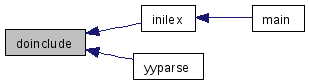
Here is the call graph for this function:

Here is the caller graph for this function:
| void endcheck | ( | Void | ) |
Definition at line 1744 of file lex.c.
References lastch, lexstate, RETEOS, and warn().
Referenced by yyparse().
01745 {
01746         if (nextch <= lastch)
01747                 warn("ignoring text after \"end\".");
01748         lexstate = RETEOS;
01749         }
Here is the call graph for this function:

Here is the caller graph for this function:

| void flline | ( | Void | ) |
| static void flush_comments | ( | Void | ) | [static] |
Definition at line 1700 of file lex.c.
References comment_buf::buf, cbcur, cbfirst, cbinit, cbnext, last, comment_buf::last, comment_buf::next, p1_comment(), s, and s1.
Referenced by getcds(), store_comment(), and yylex().
01701 {
01702         register char *s, *s1;
01703         register comment_buf *cb;
01704         if (cbnext == cbinit)
01705                 return;
01706         cbcur->last = cbnext;
01707         for(cb = cbfirst;; cb = cb->next) {
01708                 for(s = cb->buf; s < cb->last; s = s1) {
01709                         /* compute s1 = new s value first, since */
01710                         /* p1_comment may insert nulls into s */
01711                         s1 = s + strlen(s) + 1;
01712                         p1_comment(s);
01713                         }
01714                 if (cb == cbcur)
01715                         break;
01716                 }
01717         cbcur = cbfirst;
01718         cbnext = cbinit;
01719         cblast = cbnext + COMMENT_BUF_STORE;
01720         }
Here is the call graph for this function:

Here is the caller graph for this function:

Definition at line 713 of file lex.c.
References addftnsrc, Alloc(), bang(), BLANK, COMMENT_BUFFER_SIZE, comstart, endcd, EOF_CHAR, errstr(), firstline, free(), i, infile, infname, infname1, L, laststb, lineno, NO, nxtstno, p, send, shend, stb0, STCONTINUE, STEOF, STINITIAL, store_comment(), Table_size, thislin, top, ungetc(), warn72, and YES.
Referenced by getcds().
00715 { 00716 register int c; 00717 register char *p, *bend; 00718 int speclin; /* Special line - true when the line is allowed 00719 to have more than 66 characters (e.g. the 00720 "&" shorthand for continuation, use of a "\t" 00721 to skip part of the label columns) */ 00722 static char a[6]; /* Statement label buffer */ 00723 static char *aend = a+6; 00724 static char *stb, *stbend; 00725 static int nst; 00726 char *atend, *endcd0; 00727 extern int warn72; 00728 char buf72[24]; 00729 int amp, i; 00730 char storage[COMMENT_BUFFER_SIZE + 1]; 00731 char *pointer; 00732 long L; 00733 00734 top: 00735 endcd = b; 00736 bend = b+66; 00737 amp = speclin = NO; 00738 atend = aend; 00739 00740 /* Handle the continuation shorthand of "&" in the first column, which stands 00741 for " x" */ 00742 00743 if( (c = getc(infile)) == '&') 00744 { 00745 a[0] = c; 00746 a[1] = 0; 00747 a[5] = 'x'; 00748 amp = speclin = YES; 00749 bend = send; 00750 p = aend; 00751 } 00752 00753 /* Handle the Comment cards (a 'C', 'c', '*', or '!' in the first column). */ 00754 00755 else if(comstart[c & (Table_size-1)]) 00756 { 00757 if (feof (infile) 00758 #ifdef EOF_CHAR 00759 || c == EOF_CHAR 00760 #endif 00761 ) 00762 return STEOF; 00763 00764 if (c == '#') { 00765 *endcd++ = c; 00766 while((c = getc(infile)) != '\n') 00767 if (c == EOF) 00768 return STEOF; 00769 else if (endcd < shend) 00770 *endcd++ = c; 00771 ++thislin; 00772 *endcd = 0; 00773 if (b[1] == ' ') 00774 p = b + 2; 00775 else if (!strncmp(b,"#line ",6)) 00776 p = b + 6; 00777 else { 00778 bad_cpp: 00779 lineno = thislin; 00780 errstr("Bad # line: \"%s\"", b); 00781 goto top; 00782 } 00783 if (*p < '1' || *p > '9') 00784 goto bad_cpp; 00785 L = *p - '0'; 00786 while((c = *++p) >= '0' && c <= '9') 00787 L = 10*L + c - '0'; 00788 while(c == ' ') 00789 c = *++p; 00790 if (!c) { 00791 /* accept "# 1234" */ 00792 thislin = L - 1; 00793 goto top; 00794 } 00795 if (c != '"') 00796 goto bad_cpp; 00797 bend = p; 00798 while(*++p != '"') 00799 if (!*p) 00800 goto bad_cpp; 00801 *p = 0; 00802 i = p - bend++; 00803 thislin = L - 1; 00804 if (!infname1 || strcmp(infname1, bend)) { 00805 if (infname1) 00806 free(infname1); 00807 if (infname && !strcmp(infname, bend)) { 00808 infname1 = 0; 00809 goto top; 00810 } 00811 lastfile = 0; 00812 infname1 = Alloc(i); 00813 strcpy(infname1, bend); 00814 if (!infname) { 00815 infname = infname1; 00816 infname1 = 0; 00817 } 00818 } 00819 goto top; 00820 } 00821 00822 storage[COMMENT_BUFFER_SIZE] = c = '\0'; 00823 pointer = storage; 00824 while( !feof (infile) && (*pointer++ = c = getc(infile)) != '\n') { 00825 00826 /* Handle obscure end of file conditions on many machines */ 00827 00828 if (feof (infile) && (c == '\377' || c == EOF)) { 00829 pointer--; 00830 break; 00831 } /* if (feof (infile)) */ 00832 00833 if (c == '\0') 00834 *(pointer - 1) = ' '; 00835 00836 if (pointer == &storage[COMMENT_BUFFER_SIZE]) { 00837 store_comment (storage); 00838 pointer = storage; 00839 } /* if (pointer == BUFFER_SIZE) */ 00840 } /* while */ 00841 00842 if (pointer > storage) { 00843 if (c == '\n') 00844 00845 /* Get rid of the newline */ 00846 00847 pointer[-1] = 0; 00848 else 00849 *pointer = 0; 00850 00851 store_comment (storage); 00852 } /* if */ 00853 00854 if (feof (infile)) 00855 if (c != '\n') /* To allow the line index to 00856 increment correctly */ 00857 return STEOF; 00858 00859 ++thislin; 00860 goto top; 00861 } 00862 00863 else if(c != EOF) 00864 { 00865 00866 /* Load buffer a with the statement label */ 00867 00868 /* a tab in columns 1-6 skips to column 7 */ 00869 ungetc(c, infile); 00870 for(p=a; p<aend && (c=getc(infile)) != '\n' && c!=EOF; ) 00871 if(c == '\t') 00872 00873 /* The tab character translates into blank characters in the statement label */ 00874 00875 { 00876 atend = p; 00877 while(p < aend) 00878 *p++ = BLANK; 00879 speclin = YES; 00880 bend = send; 00881 } 00882 else 00883 *p++ = c; 00884 } 00885 00886 /* By now we've read either a continuation character or the statement label 00887 field */ 00888 00889 if(c == EOF) 00890 return(STEOF); 00891 00892 /* The next 'if' block handles lines that have fewer than 7 characters */ 00893 00894 if(c == '\n') 00895 { 00896 while(p < aend) 00897 *p++ = BLANK; 00898 00899 /* Blank out the buffer on lines which are not longer than 66 characters */ 00900 00901 endcd0 = endcd; 00902 if( ! speclin ) 00903 while(endcd < bend) 00904 *endcd++ = BLANK; 00905 } 00906 else { /* read body of line */ 00907 if (warn72 & 2) { 00908 speclin = YES; 00909 bend = send; 00910 } 00911 while( endcd<bend && (c=getc(infile)) != '\n' && c!=EOF ) 00912 *endcd++ = c; 00913 if(c == EOF) 00914 return(STEOF); 00915 00916 /* Drop any extra characters on the input card; this usually means those after 00917 column 72 */ 00918 00919 if(c != '\n') 00920 { 00921 i = 0; 00922 while( (c=getc(infile)) != '\n' && c != EOF) 00923 if (i < 23 && c != '\r') 00924 buf72[i++] = c; 00925 if (warn72 && i && !speclin) { 00926 buf72[i] = 0; 00927 if (i >= 23) 00928 strcpy(buf72+20, "..."); 00929 lineno = thislin + 1; 00930 errstr("text after column 72: %s", buf72); 00931 } 00932 if(c == EOF) 00933 return(STEOF); 00934 } 00935 00936 endcd0 = endcd; 00937 if( ! speclin ) 00938 while(endcd < bend) 00939 *endcd++ = BLANK; 00940 } 00941 00942 /* The flow of control usually gets to this line (unless an earlier RETURN has 00943 been taken) */ 00944 00945 ++thislin; 00946 00947 /* Fortran 77 specifies that a 0 in column 6 */ 00948 /* does not signify continuation */ 00949 00950 if( !isspace(a[5]) && a[5]!='0') { 00951 if (!amp) 00952 for(p = a; p < aend;) 00953 if (*p++ == '!' && p != aend) 00954 goto initcheck; 00955 if (addftnsrc && stb) { 00956 if (stbend > stb + 7) { /* otherwise forget col 1-6 */ 00957 /* kludge around funny p1gets behavior */ 00958 *stb++ = '$'; 00959 if (amp) 00960 *stb++ = '&'; 00961 else 00962 for(p = a; p < atend;) 00963 *stb++ = *p++; 00964 } 00965 if (endcd0 - b > stbend - stb) { 00966 if (stb > stbend) 00967 stb = stbend; 00968 endcd0 = b + (stbend - stb); 00969 } 00970 for(p = b; p < endcd0;) 00971 *stb++ = *p++; 00972 *stb++ = '\n'; 00973 *stb = 0; 00974 } 00975 if (nocont) { 00976 lineno = thislin; 00977 errstr("illegal continuation card (starts \"%.6s\")",a); 00978 } 00979 else if (!amp && strncmp(a," ",5)) { 00980 lineno = thislin; 00981 errstr("labeled continuation line (starts \"%.6s\")",a); 00982 } 00983 return(STCONTINUE); 00984 } 00985 initcheck: 00986 for(p=a; p<atend; ++p) 00987 if( !isspace(*p) ) { 00988 if (*p++ != '!') 00989 goto initline; 00990 bang(p, atend, aend, b, endcd); 00991 goto top; 00992 } 00993 for(p = b ; p<endcd ; ++p) 00994 if( !isspace(*p) ) { 00995 if (*p++ != '!') 00996 goto initline; 00997 bang(a, a, a, p, endcd); 00998 goto top; 00999 } 01000 01001 /* Skip over blank cards by reading the next one right away */ 01002 01003 goto top; 01004 01005 initline: 01006 if (!lastline) 01007 lastline = thislin; 01008 if (addftnsrc) { 01009 nst = (nst+1)%3; 01010 if (!laststb && stb0) 01011 laststb = stb0; 01012 stb0 = stb = stbuf[nst]; 01013 *stb++ = '$'; /* kludge around funny p1gets behavior */ 01014 stbend = stb + sizeof(stbuf[0])-2; 01015 for(p = a; p < atend;) 01016 *stb++ = *p++; 01017 if (atend < aend) 01018 *stb++ = '\t'; 01019 for(p = b; p < endcd0;) 01020 *stb++ = *p++; 01021 *stb++ = '\n'; 01022 *stb = 0; 01023 } 01024 01025 /* Set nxtstno equal to the integer value of the statement label */ 01026 01027 nxtstno = 0; 01028 bend = a + 5; 01029 for(p = a ; p < bend ; ++p) 01030 if( !isspace(*p) ) 01031 if(isdigit(*p)) 01032 nxtstno = 10*nxtstno + (*p - '0'); 01033 else if (*p == '!') { 01034 if (!addftnsrc) 01035 bang(p+1,atend,aend,b,endcd); 01036 endcd = b; 01037 break; 01038 } 01039 else { 01040 lineno = thislin; 01041 errstr( 01042 "nondigit in statement label field \"%.5s\"", a); 01043 nxtstno = 0; 01044 break; 01045 } 01046 firstline = thislin; 01047 return(STINITIAL); 01048 }
Here is the call graph for this function:

Here is the caller graph for this function:

| LOCAL int getcds | ( | Void | ) |
Definition at line 590 of file lex.c.
References code, contmax(), endcd, errext(), flush_comments(), free(), getcd(), Inclfile::inclname, inclp, infname, infname1, infname2, lastch, lineno, linestart, maxcont, ncont, nextcd, nextch, noextflag, NULL, nxtstno, p, popinclude(), prevlin, sbuf, send, STCONTINUE, STEOF, STINITIAL, stno, thislin, and top.
Referenced by yylex().
00591 {
00592         register char *p, *q;
00593
00594         flush_comments ();
00595 top:
00596         if(nextcd == NULL)
00597         {
00598                 code = getcd( nextcd = sbuf, 1 );
00599                 stno = nxtstno;
00600                 prevlin = thislin;
00601         }
00602         if(code == STEOF)
00603                 if( popinclude() )
00604                         goto top;
00605                 else
00606                         return(STEOF);
00607
00608         if(code == STCONTINUE)
00609         {
00610                 lineno = thislin;
00611                 nextcd = NULL;
00612                 goto top;
00613         }
00614
00615 /* Get rid of unused space at the head of the buffer */
00616
00617         if(nextcd > sbuf)
00618         {
00619                 q = nextcd;
00620                 p = sbuf;
00621                 while(q < endcd)
00622                         *p++ = *q++;
00623                 endcd = p;
00624         }
00625
00626 /* Be aware that the input (i.e. the string at the address   nextcd)   is NOT
00627    NULL-terminated */
00628
00629 /* This loop merges all continuations into one long statement, AND puts the next
00630    card to be read at the end of the buffer (i.e. it stores the look-ahead card
00631    when there's room) */
00632
00633         ncont = 0;
00634         for(;;) {
00635                 nextcd = endcd;
00636                 if (ncont >= maxcont || nextcd+66 > send)
00637                         contmax();
00638                 linestart[ncont++] = nextcd;
00639                 if ((code = getcd(nextcd,0)) != STCONTINUE)
00640                         break;
00641                 if (ncont == 20 && noextflag) {
00642                         lineno = thislin;
00643                         errext("more than 19 continuation lines");
00644                         }
00645                 }
00646         nextch = sbuf;
00647         lastch = nextcd - 1;
00648
00649         lineno = prevlin;
00650         prevlin = thislin;
00651         if (infname2) {
00652                 free(infname);
00653                 infname = infname2;
00654                 if (inclp)
00655                         inclp->inclname = infname;
00656                 }
00657         infname2 = infname1;
00658         infname1 = 0;
00659         return(STINITIAL);
00660 }
Here is the call graph for this function:

Here is the caller graph for this function:

| LOCAL int getkwd | ( | Void | ) |
Definition at line 1284 of file lex.c.
References errstr(), i, isalpha_, j, keyend, keystart, lastch, letter, nextch, no66flag, pend, pk, SUNKNOWN, and USC.
Referenced by analyz(), and gettok().
01285 {
01286         register char *i, *j;
01287         register struct Keylist *pk, *pend;
01288         int k;
01289
01290         if(! isalpha_(* USC nextch) )
01291                 return(SUNKNOWN);
01292         k = letter(nextch[0]);
01293         if(pk = keystart[k])
01294                 for(pend = keyend[k] ; pk<=pend ; ++pk )
01295                 {
01296                         i = pk->keyname;
01297                         j = nextch;
01298                         while(*++i==*++j && *i!='\0')
01299                                 ;
01300                         if(*i=='\0' && j<=lastch+1)
01301                         {
01302                                 nextch = j;
01303                                 if(no66flag && pk->notinf66)
01304                                         errstr("Not a Fortran 66 keyword: %s",
01305                                             pk->keyname);
01306                                 return(pk->keyval);
01307                         }
01308                 }
01309         return(SUNKNOWN);
01310 }
Here is the call graph for this function:

Here is the caller graph for this function:

| LOCAL int gettok | ( | Void | ) |
Definition at line 1396 of file lex.c.
References errext(), getkwd(), hexcheck(), i, isalpha_, j, lastch, MYQUOTE, n1, needkwd, new_dcl, nextch, NOEXT, noextflag, p, parlev, pp, puncts, SCONCAT, SEQ, SGE, SHOLLERITH, SLE, SLPAR, SNE, SPOWER, SRPAR, SSLASHD, token, toklen, USC, and val.
Referenced by yylex().
01397 { 01398 int havdot, havexp, havdbl; 01399 int radix, val; 01400 struct Punctlist *pp; 01401 struct Dotlist *pd; 01402 register int ch; 01403 static char Exp_mi[] = "X**-Y treated as X**(-Y)", 01404 Exp_pl[] = "X**+Y treated as X**(+Y)"; 01405 01406 char *i, *j, *n1, *p; 01407 01408 ch = * USC nextch; 01409 if(ch == (MYQUOTE)) 01410 { 01411 ++nextch; 01412 p = token; 01413 while(*nextch != MYQUOTE) 01414 *p++ = *nextch++; 01415 toklen = p - token; 01416 *p = 0; 01417 /* allow octal, binary, hex constants of the form 'abc'x (etc.) */ 01418 if (++nextch <= lastch && isalpha_(val = * USC nextch)) { 01419 ++nextch; 01420 return hexcheck(val); 01421 } 01422 return (SHOLLERITH); 01423 } 01424 01425 if(needkwd) 01426 { 01427 needkwd = 0; 01428 return( getkwd() ); 01429 } 01430 01431 for(pp=puncts; pp->punchar; ++pp) 01432 if(ch == pp->punchar) { 01433 val = pp->punval; 01434 if (++nextch <= lastch) 01435 switch(ch) { 01436 case '/': 01437 switch(*nextch) { 01438 case '/': 01439 nextch++; 01440 val = SCONCAT; 01441 break; 01442 case '=': 01443 goto sne; 01444 default: 01445 if (new_dcl && parlev == 0) 01446 val = SSLASHD; 01447 } 01448 return val; 01449 case '*': 01450 if (*nextch == '*') { 01451 nextch++; 01452 if (noextflag 01453 && nextch <= lastch) 01454 switch(*nextch) { 01455 case '-': 01456 errext(Exp_mi); 01457 break; 01458 case '+': 01459 errext(Exp_pl); 01460 } 01461 return SPOWER; 01462 } 01463 break; 01464 case '<': 01465 switch(*nextch) { 01466 case '=': 01467 nextch++; 01468 val = SLE; 01469 break; 01470 case '>': 01471 sne: 01472 nextch++; 01473 val = SNE; 01474 } 01475 goto extchk; 01476 case '=': 01477 if (*nextch == '=') { 01478 nextch++; 01479 val = SEQ; 01480 goto extchk; 01481 } 01482 break; 01483 case '>': 01484 if (*nextch == '=') { 01485 nextch++; 01486 val = SGE; 01487 } 01488 extchk: 01489 NOEXT("Fortran 8x comparison operator"); 01490 return val; 01491 } 01492 else if (ch == '/' && new_dcl && parlev == 0) 01493 return SSLASHD; 01494 switch(val) { 01495 case SLPAR: 01496 ++parlev; 01497 break; 01498 case SRPAR: 01499 --parlev; 01500 } 01501 return(val); 01502 } 01503 if(ch == '.') 01504 if(nextch >= lastch) goto badchar; 01505 else if(isdigit(nextch[1])) goto numconst; 01506 else { 01507 for(pd=dots ; (j=pd->dotname) ; ++pd) 01508 { 01509 for(i=nextch+1 ; i<=lastch ; ++i) 01510 if(*i != *j) break; 01511 else if(*i != '.') ++j; 01512 else { 01513 nextch = i+1; 01514 return(pd->dotval); 01515 } 01516 } 01517 goto badchar; 01518 } 01519 if( isalpha_(ch) ) 01520 { 01521 p = token; 01522 *p++ = *nextch++; 01523 while(nextch<=lastch) 01524 if( isalnum_(* USC nextch) ) 01525 *p++ = *nextch++; 01526 else break; 01527 toklen = p - token; 01528 *p = 0; 01529 if (needwkey) { 01530 needwkey = 0; 01531 if (toklen == 5 01532 && nextch <= lastch && *nextch == '(' /*)*/ 01533 && !strcmp(token,"while")) 01534 return(SWHILE); 01535 } 01536 if(inioctl && nextch<=lastch && *nextch=='=') 01537 { 01538 ++nextch; 01539 return(SNAMEEQ); 01540 } 01541 if(toklen>8 && eqn(8,token,"function") 01542 && isalpha_(* USC (token+8)) && 01543 nextch<lastch && nextch[0]=='(' && 01544 (nextch[1]==')' || isalpha_(* USC (nextch+1))) ) 01545 { 01546 nextch -= (toklen - 8); 01547 return(SFUNCTION); 01548 } 01549 01550 if(toklen > MAXNAMELEN) 01551 { 01552 char buff[2*MAXNAMELEN+50]; 01553 if (toklen >= MAXNAMELEN+10) 01554 sprintf(buff, 01555 "name %.*s... too long, truncated to %.*s", 01556 MAXNAMELEN+6, token, MAXNAMELEN, token); 01557 else 01558 sprintf(buff, 01559 "name %s too long, truncated to %.*s", 01560 token, MAXNAMELEN, token); 01561 err(buff); 01562 toklen = MAXNAMELEN; 01563 token[MAXNAMELEN] = '\0'; 01564 } 01565 if(toklen==1 && *nextch==MYQUOTE) { 01566 val = token[0]; 01567 ++nextch; 01568 for(p = token ; *nextch!=MYQUOTE ; ) 01569 *p++ = *nextch++; 01570 ++nextch; 01571 toklen = p - token; 01572 *p = 0; 01573 return hexcheck(val); 01574 } 01575 return(SNAME); 01576 } 01577 01578 if (isdigit(ch)) { 01579 01580 /* Check for NAG's special hex constant */ 01581 01582 if (nextch[1] == '#' && nextch < lastch 01583 || nextch[2] == '#' && isdigit(nextch[1]) 01584 && lastch - nextch >= 2) { 01585 01586 radix = atoi (nextch); 01587 if (*++nextch != '#') 01588 nextch++; 01589 if (radix != 2 && radix != 8 && radix != 16) { 01590 erri("invalid base %d for constant, defaulting to hex", 01591 radix); 01592 radix = 16; 01593 } /* if */ 01594 if (++nextch > lastch) 01595 goto badchar; 01596 for (p = token; hextoi(*nextch) < radix;) { 01597 *p++ = *nextch++; 01598 if (nextch > lastch) 01599 break; 01600 } 01601 toklen = p - token; 01602 *p = 0; 01603 return (radix == 16) ? SHEXCON : ((radix == 8) ? SOCTCON : 01604 SBITCON); 01605 } 01606 } 01607 else 01608 goto badchar; 01609 numconst: 01610 havdot = NO; 01611 havexp = NO; 01612 havdbl = NO; 01613 for(n1 = nextch ; nextch<=lastch ; ++nextch) 01614 { 01615 if(*nextch == '.') 01616 if(havdot) break; 01617 else if(nextch+2<=lastch && isalpha_(* USC (nextch+1)) 01618 && isalpha_(* USC (nextch+2))) 01619 break; 01620 else havdot = YES; 01621 else if( ! isdigit(* USC nextch) ) { 01622 if( !intonly && (*nextch=='d' || *nextch=='e') ) { 01623 p = nextch; 01624 havexp = YES; 01625 if(*nextch == 'd') 01626 havdbl = YES; 01627 if(nextch<lastch) 01628 if(nextch[1]=='+' || nextch[1]=='-') 01629 ++nextch; 01630 if( ! isdigit(*++nextch) ) { 01631 nextch = p; 01632 havdbl = havexp = NO; 01633 break; 01634 } 01635 for(++nextch ; 01636 nextch<=lastch && isdigit(* USC nextch); 01637 ++nextch); 01638 } 01639 break; 01640 } 01641 } 01642 p = token; 01643 i = n1; 01644 while(i < nextch) 01645 *p++ = *i++; 01646 toklen = p - token; 01647 *p = 0; 01648 if(havdbl) return(SDCON); 01649 if(havdot || havexp) return(SRCON); 01650 return(SICON); 01651 badchar: 01652 sbuf[0] = *nextch++; 01653 return(SUNKNOWN); 01654 }
Here is the call graph for this function:

Here is the caller graph for this function:

Definition at line 1352 of file lex.c.
References err, errstr(), hextoi, p, SBITCON, SHEXCON, SNAME, SOCTCON, and token.
Referenced by gettok().
01354 {
01355         register int radix;
01356         register char *p;
01357         char *kind;
01358
01359         switch(key) {
01360                 case 'z':
01361                 case 'Z':
01362                 case 'x':
01363                 case 'X':
01364                         radix = 16;
01365                         key = SHEXCON;
01366                         kind = "hexadecimal";
01367                         break;
01368                 case 'o':
01369                 case 'O':
01370                         radix = 8;
01371                         key = SOCTCON;
01372                         kind = "octal";
01373                         break;
01374                 case 'b':
01375                 case 'B':
01376                         radix = 2;
01377                         key = SBITCON;
01378                         kind = "binary";
01379                         break;
01380                 default:
01381                         err("bad bit identifier");
01382                         return(SNAME);
01383                 }
01384         for(p = token; *p; p++)
01385                 if (hextoi(*p) >= radix) {
01386                         errstr("invalid %s character", kind);
01387                         break;
01388                         }
01389         return key;
01390         }
Here is the call graph for this function:

Here is the caller graph for this function:

| int inilex | ( | char * | name | ) |
Definition at line 264 of file lex.c.
References Alloc(), doinclude(), inclp, lexstate, NEWSTMT, nincl, NO, NULL, and P1_STMTBUFSIZE.
Referenced by main().
00266 {
00267         stbuf[0] = Alloc(3*P1_STMTBUFSIZE);
00268         stbuf[1] = stbuf[0] + P1_STMTBUFSIZE;
00269         stbuf[2] = stbuf[1] + P1_STMTBUFSIZE;
00270         nincl = 0;
00271         inclp = NULL;
00272         doinclude(name);
00273         lexstate = NEWSTMT;
00274         return(NO);
00275 }
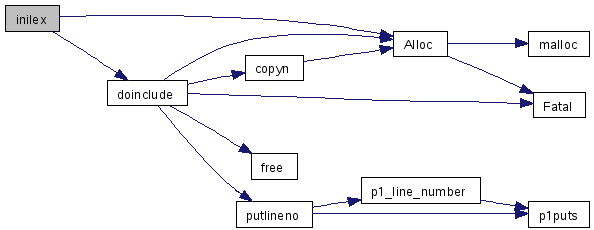
Here is the call graph for this function:
Here is the caller graph for this function:

| void initkey | ( | Void | ) |
Definition at line 1313 of file lex.c.
References anum_buf, ckalloc(), comstart, EOF_CHAR, i, j, keyend, keys, keystart, letter, linestart, MAX_SHARPLINE_LEN, maxcont, maxcontin, NULL, p, s, sbuf, send, and shend.
Referenced by main().
01314 {
01315         register struct Keylist *p;
01316         register int i,j;
01317         register char *s;
01318
01319         for(i = 0 ; i<26 ; ++i)
01320                 keystart[i] = NULL;
01321
01322         for(p = keys ; p->keyname ; ++p) {
01323                 j = letter(p->keyname[0]);
01324                 if(keystart[j] == NULL)
01325                         keystart[j] = p;
01326                 keyend[j] = p;
01327                 }
01328         i = (maxcontin + 2) * 66;
01329         sbuf = (char *)ckalloc(i + 70 + MAX_SHARPLINE_LEN);
01330         send = sbuf + i;
01331         shend = send + MAX_SHARPLINE_LEN;
01332         maxcont = maxcontin + 1;
01333         linestart = (char **)ckalloc(maxcont*sizeof(char*));
01334         comstart['c'] = comstart['C'] = comstart['*'] = comstart['!'] =
01335         comstart['#'] = 1;
01336 #ifdef EOF_CHAR
01337         comstart[EOF_CHAR] = 1;
01338 #endif
01339         s = "abcdefghijklmnopqrstuvwxyzABCDEFGHIJKLMNOPQRSTUVWXYZ_";
01340         while(i = *s++)
01341                 anum_buf[i] = 1;
01342         s = "0123456789";
01343         while(i = *s++)
01344                 anum_buf[i] = 2;
01345         }
Here is the call graph for this function:

Here is the caller graph for this function:

| char* lexline | ( | int * | n | ) |
| void p1_line_number | ( | long | line_number | ) |
Definition at line 463 of file lex.c.
References lastfile0, P1_FILENAME, P1_SET_LINE, p1puts(), and pass1_file.
Referenced by enddcl(), and putlineno().
00465 {
00466         if (lastfile != lastfile0) {
00467                 p1puts(P1_FILENAME, fbuf);
00468                 lastfile0 = lastfile;
00469                 }
00470         fprintf(pass1_file, "%d: %ld\n", P1_SET_LINE, line_number);
00471         }
Here is the call graph for this function:

Here is the caller graph for this function:

| LOCAL int popinclude | ( | Void | ) |
Definition at line 415 of file lex.c.
References clf(), code, endcd, err_lineno, free(), Inclfile::inclnext, inclp, infile, infname, lineno, nextcd, nincl, NO, NULL, nxtstno, p, prevlin, putlineno(), sbuf, stno, t, thislin, and YES.
Referenced by getcds().
00416 {
00417         struct Inclfile *t;
00418         register char *p;
00419         register int k;
00420
00421         if(infile != stdin)
00422                 clf(&infile, infname, 1);       /* Close the input file */
00423         free(infname);
00424
00425         --nincl;
00426         err_lineno = -1;
00427         t = inclp->inclnext;
00428         free( (charptr) inclp);
00429         inclp = t;
00430         if(inclp == NULL) {
00431                 infname = 0;
00432                 return(NO);
00433                 }
00434
00435         infile = inclp->inclfp;
00436         infname = inclp->inclname;
00437         lineno = prevlin = thislin = inclp->incllno;
00438         code = inclp->inclcode;
00439         stno = nxtstno = inclp->inclstno;
00440         if(inclp->incllinp)
00441         {
00442                 lastline = 0;
00443                 putlineno();
00444                 lastline = lineno;
00445                 endcd = nextcd = sbuf;
00446                 k = inclp->incllen;
00447                 p = inclp->incllinp;
00448                 while(--k >= 0)
00449                         *endcd++ = *p++;
00450                 free( (charptr) (inclp->incllinp) );
00451         }
00452         else
00453                 nextcd = NULL;
00454         return(YES);
00455 }
Here is the call graph for this function:

Here is the caller graph for this function:

| static void putlineno | ( | Void | ) | [static] |
Definition at line 474 of file lex.c.
References addftnsrc, firstline, gflag, infname, laststb, P1_FORTRAN, p1_line_number(), p1puts(), s1, and stb0.
Referenced by doinclude(), popinclude(), and yylex().
00475 {
00476         extern int gflag;
00477         register char *s0, *s1;
00478
00479         if (gflag) {
00480                 if (lastline)
00481                         p1_line_number(lastline);
00482                 lastline = firstline;
00483                 if (lastfile != infname)
00484                         if (lastfile = infname) {
00485                                 strncpy(fbuf, lastfile, sizeof(fbuf));
00486                                 fbuf[sizeof(fbuf)-1] = 0;
00487                                 }
00488                         else
00489                                 fbuf[0] = 0;
00490                 }
00491         if (addftnsrc) {
00492                 if (laststb && *laststb) {
00493                         for(s1 = laststb; *s1; s1++) {
00494                                 for(s0 = s1; *s1 != '\n'; s1++)
00495                                         if (*s1 == '*' && s1[1] == '/')
00496                                                 *s1 = '+';
00497                                 *s1 = 0;
00498                                 p1puts(P1_FORTRAN, s0);
00499                                 }
00500                         *laststb = 0;   /* prevent trouble after EOF */
00501                         }
00502                 laststb = stb0;
00503                 }
00504         }
Here is the call graph for this function:

Here is the caller graph for this function:

| static void store_comment | ( | char * | str | ) | [static] |
Definition at line 1663 of file lex.c.
References Alloc(), comment_buf::buf, cbcur, cbfirst, cbinit, cblast, cbnext, COMMENT_BUF_STORE, flush_comments(), comment_buf::last, len, comment_buf::next, nextcd, p1_comment(), and sbuf.
Referenced by bang(), and getcd().
01665 {
01666         int len;
01667         comment_buf *ncb;
01668
01669         if (nextcd == sbuf) {
01670                 flush_comments();
01671                 p1_comment(str);
01672                 return;
01673                 }
01674         len = strlen(str) + 1;
01675         if (cbnext + len > cblast) {
01676                 ncb = 0;
01677                 if (cbcur) {
01678                         cbcur->last = cbnext;
01679                         ncb = cbcur->next;
01680                         }
01681                 if (!ncb) {
01682                         ncb = (comment_buf *) Alloc(sizeof(comment_buf));
01683                         if (cbcur)
01684                                 cbcur->next = ncb;
01685                         else {
01686                                 cbfirst = ncb;
01687                                 cbinit = ncb->buf;
01688                                 }
01689                         ncb->next = 0;
01690                         }
01691                 cbcur = ncb;
01692                 cbnext = ncb->buf;
01693                 cblast = cbnext + COMMENT_BUF_STORE;
01694                 }
01695         strcpy(cbnext, str);
01696         cbnext += len;
01697         }
Here is the call graph for this function:

Here is the caller graph for this function:

| void unclassifiable | ( | Void | ) |
Definition at line 1723 of file lex.c.
References errstr(), lastch, MYQUOTE, s, and sbuf.
Referenced by yyparse().
01724 {
01725         register char *s, *se;
01726
01727         s = sbuf;
01728         se = lastch;
01729         if (se < sbuf)
01730                 return;
01731         lastch = s - 1;
01732         if (++se - s > 10)
01733                 se = s + 10;
01734         for(; s < se; s++)
01735                 if (*s == MYQUOTE) {
01736                         se = s;
01737                         break;
01738                         }
01739         *se = 0;
01740         errstr("unclassifiable statement (starts \"%s\")", sbuf);
01741         }
Here is the call graph for this function:

Here is the caller graph for this function:

| int yylex | ( | Void | ) |
Definition at line 507 of file lex.c.
References analyz(), crunch(), fatali(), first, FIRSTTOKEN, flush_comments(), getcds(), gettok(), intonly, lastch, lexstate, NEWSTMT, nextch, nxtstno, OTHERTOKEN, parlev, putlineno(), RETEOS, retval(), SASSIGN, SDO, SELSEIF, SEOF, SEOS, SLABEL, SLOGIF, STEOF, stkey, stno, STO, toklen, and yystno.
Referenced by yylex1().
00508 {
00509         static int  tokno;
00510         int retval;
00511
00512         switch(lexstate)
00513         {
00514         case NEWSTMT :  /* need a new statement */
00515                 retval = getcds();
00516                 putlineno();
00517                 if(retval == STEOF) {
00518                         retval = SEOF;
00519                         break;
00520                 } /* if getcds() == STEOF */
00521                 crunch();
00522                 tokno = 0;
00523                 lexstate = FIRSTTOKEN;
00524                 yystno = stno;
00525                 stno = nxtstno;
00526                 toklen = 0;
00527                 retval = SLABEL;
00528                 break;
00529
00530 first:
00531         case FIRSTTOKEN :       /* first step on a statement */
00532                 analyz();
00533                 lexstate = OTHERTOKEN;
00534                 tokno = 1;
00535                 retval = stkey;
00536                 break;
00537
00538         case OTHERTOKEN :       /* return next token */
00539                 if(nextch > lastch)
00540                         goto reteos;
00541                 ++tokno;
00542                 if( (stkey==SLOGIF || stkey==SELSEIF) && parlev==0 && tokno>3)
00543                         goto first;
00544
00545                 if(stkey==SASSIGN && tokno==3 && nextch<lastch &&
00546                     nextch[0]=='t' && nextch[1]=='o')
00547                 {
00548                         nextch+=2;
00549                         retval = STO;
00550                         break;
00551                 }
00552                 if (tokno == 2 && stkey == SDO) {
00553                         intonly = 1;
00554                         retval = gettok();
00555                         intonly = 0;
00556                         }
00557                 else
00558                         retval = gettok();
00559                 break;
00560
00561 reteos:
00562         case RETEOS:
00563                 lexstate = NEWSTMT;
00564                 retval = SEOS;
00565                 break;
00566         default:
00567                 fatali("impossible lexstate %d", lexstate);
00568                 break;
00569         }
00570
00571         if (retval == SEOF)
00572             flush_comments ();
00573
00574         return retval;
00575 }
Here is the call graph for this function:
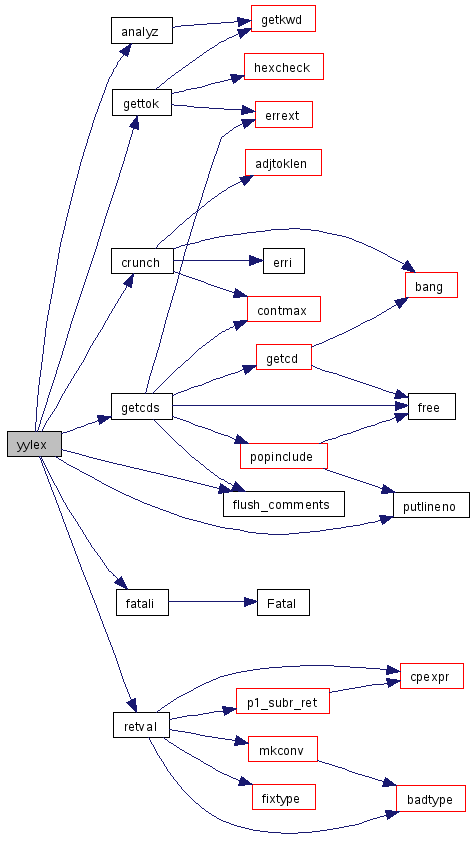
Here is the caller graph for this function:

comment_buf * cbcur [static] |
comment_buf* cbfirst [static] |
char* cbinit [static] |
char * cblast [static] |
char * cbnext [static] |
Definition at line 76 of file lex.c.
Referenced by doinclude(), example3(), FindLanguageCode(), GetBasType(), getcds(), GetForType(), is_dead_key(), LWZReadByte_(), MChoicePage(), MDialogPage(), popinclude(), putcxeq(), SendScilabJob(), SGetCDec(), SGetForDec(), SGetForType(), SGetForTypeAbrev(), SGetForTypeBConvert(), SGetForTypeStack(), SGetSciType(), troisieme_exemple(), and x_render_char().
| LOCAL char comstart[Table_size] |
| LOCAL char* endcd |
Definition at line 73 of file lex.c.
Referenced by doinclude(), getcd(), getcds(), and popinclude().
Definition at line 136 of file lex.c.
Referenced by doinclude(), getcds(), inilex(), and popinclude().
| LOCAL char* lastch |
char * lastfile0 = "?" [static] |
| LOCAL char * laststb |
char** linestart [static] |
| LOCAL char* nextcd = NULL |
Definition at line 72 of file lex.c.
Referenced by doinclude(), getcds(), popinclude(), and store_comment().
| LOCAL char* nextch |
Definition at line 65 of file lex.c.
Referenced by doinclude(), getcd(), getcds(), popinclude(), and yylex().
| LOCAL char* sbuf |
Definition at line 78 of file lex.c.
Referenced by analyz(), crunch(), getcds(), initkey(), popinclude(), store_comment(), and unclassifiable().
| LOCAL char* send |
| LOCAL char * stb0 |
Definition at line 75 of file lex.c.
Referenced by contmax(), doinclude(), getcd(), getcds(), and popinclude().
 1.5.1
1.5.1


