
#include "defs.h"#include "names.h"#include "output.h"#include "stdarg.h"Include dependency graph for niceprintf.c:
Go to the source code of this file.
Defines | |
| #define | TOO_LONG_INDENT (2 * tab_size) |
| #define | MAX_INDENT 44 |
| #define | MIN_INDENT 22 |
| #define | SPRINTF(x, a, b, c, d, e, f, g) vsprintf(x,a,ap) |
| #define | max_line_len c_output_line_length |
| #define | isident(x) (Tr[x] & 1) |
| #define | isntident(x) (!Tr[x]) |
Functions | |
| static void ind_printf | Argdcl ((int, FILE *, const char *, va_list)) |
| static void | write_indent (FILE *fp, int use_indent, int extra_indent, char *start, char *end) |
| void | margin_printf (FILE *fp, const char *fmt,...) |
| void | nice_printf (FILE *fp, const char *fmt,...) |
| void | np_init (Void) |
| static char * | adjust_pointer_in_string (register char *pointer) |
| static void | fwd_strcpy (register char *t, register char *s) |
| static void | ind_printf (int use_indent, FILE *fp, const char *a, va_list ap) |
Variables | |
| static int | last_was_newline = 0 |
| int | sharp_line = 0 |
| int | indent = 0 |
| int | in_comment = 0 |
| int | in_define = 0 |
| int | gflag1 |
| char | filename [] |
| static char * | output_buf |
| static char * | next_slot |
| static char * | string_start |
| static char * | word_start = NULL |
| static int | cursor_pos = 0 |
| static int | In_string = 0 |
| #define MAX_INDENT 44 |
| #define max_line_len c_output_line_length |
| #define MIN_INDENT 22 |
| #define TOO_LONG_INDENT (2 * tab_size) |
| static char* adjust_pointer_in_string | ( | register char * | pointer | ) | [static] |
Definition at line 169 of file niceprintf.c.
Referenced by ind_printf().
00171 {
00172         register char *s, *s1, *se, *s0;
00173
00174         /* arrange not to break \002 */
00175         s1 = string_start ? string_start : output_buf;
00176         for(s = s1; s < pointer; s++) {
00177                 s0 = s1;
00178                 s1 = s;
00179                 if (*s == '\\') {
00180                         se = s++ + 4;
00181                         if (se > pointer)
00182                                 break;
00183                         if (*s < '0' || *s > '7')
00184                                 continue;
00185                         while(++s < se)
00186                                 if (*s < '0' || *s > '7')
00187                                         break;
00188                         --s;
00189                         }
00190                 }
00191         return s0 - 1;
00192         }
Here is the caller graph for this function:

| static void ind_printf Argdcl | ( | (int, FILE *, const char *, va_list) | ) | [static] |
| static void fwd_strcpy | ( | register char * | t, | |
| register char * | s | |||
| ) | [static] |
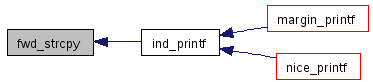
Definition at line 203 of file niceprintf.c.
Referenced by ind_printf().
Here is the caller graph for this function:
| static void ind_printf | ( | int | use_indent, | |
| FILE * | fp, | |||
| const char * | a, | |||
| va_list | ap | |||
| ) | [static] |
Definition at line 225 of file niceprintf.c.
References adjust_pointer_in_string(), Ansi, c_file, fatalstr(), fwd_strcpy(), gflag1, in_comment, in_define, ind, indent, isident, isntident, last_was_newline, MAX_INDENT, max_line_len, MIN_INDENT, NULL, sharp_line, SPRINTF, strchr(), TOO_LONG_INDENT, tr_tab, and write_indent().
Referenced by margin_printf(), and nice_printf().
00227 {
00228     extern int max_line_len;
00229     extern FILEP c_file;
00230     extern char tr_tab[];       /* in output.c */
00231     register char *Tr = tr_tab;
00232     int ch, cmax, inc, ind;
00233     static int extra_indent, last_indent, set_cursor = 1;
00234
00235     cursor_pos += indent - last_indent;
00236     last_indent = indent;
00237     SPRINTF (next_slot, a, b, c, d, e, f, g);
00238
00239     if (fp != c_file) {
00240         fprintf (fp,"%s", next_slot);
00241         return;
00242     } /* if fp != c_file */
00243
00244     do {
00245         char *pointer;
00246
00247 /* The   for   loop will parse one output line */
00248
00249         if (set_cursor) {
00250                 ind = indent <= MAX_INDENT
00251                         ? indent
00252                         : MIN_INDENT + indent % (MAX_INDENT - MIN_INDENT);
00253                 cursor_pos = extra_indent;
00254                 if (use_indent)
00255                         cursor_pos += ind;
00256                 set_cursor = 0;
00257                 }
00258         if (in_comment) {
00259                 cmax = max_line_len + 32;       /* let comments be wider */
00260                 for (pointer = next_slot; *pointer && *pointer != '\n' &&
00261                                 cursor_pos <= cmax; pointer++)
00262                         cursor_pos++;
00263                 }
00264         else
00265           for (pointer = next_slot; *pointer && *pointer != '\n' &&
00266                 cursor_pos <= max_line_len; pointer++) {
00267
00268             /* Update state variables here */
00269
00270             if (In_string) {
00271                 switch(*pointer) {
00272                         case '\\':
00273                                 if (++cursor_pos > max_line_len) {
00274                                         cursor_pos -= 2;
00275                                         --pointer;
00276                                         goto overflow;
00277                                         }
00278                                 ++pointer;
00279                                 break;
00280                         case '"':
00281                                 In_string = 0;
00282                                 word_start = 0;
00283                         }
00284                 }
00285             else switch (*pointer) {
00286                 case '"':
00287                         if (cursor_pos + 5 > max_line_len) {
00288                                 word_start = 0;
00289                                 --pointer;
00290                                 goto overflow;
00291                                 }
00292                         In_string = 1;
00293                         string_start = word_start = pointer;
00294                         break;
00295                 case '\'':
00296                         if (pointer[1] == '\\')
00297                                 if ((ch = pointer[2]) >= '0' && ch <= '7')
00298                                         for(inc = 3; pointer[inc] != '\''
00299                                                 && ++inc < 5;);
00300                                 else
00301                                         inc = 3;
00302                         else
00303                                 inc = 2;
00304                         /*debug*/ if (pointer[inc] != '\'')
00305                         /*debug*/  fatalstr("Bad character constant %.10s",
00306                                         pointer);
00307                         if ((cursor_pos += inc) > max_line_len) {
00308                                 cursor_pos -= inc;
00309                                 word_start = 0;
00310                                 --pointer;
00311                                 goto overflow;
00312                                 }
00313                         word_start = pointer;
00314                         pointer += inc;
00315                         break;
00316                 case '\t':
00317                     cursor_pos = 8 * ((cursor_pos + 8) / 8) - 1;
00318                     break;
00319                 default: {
00320
00321 /* HACK  Assumes that all characters in an atomic C token will be written
00322    at the same time.  Must check for tokens first, since '-' is considered
00323    part of an identifier; checking isident first would mean breaking up "->" */
00324
00325                     if (word_start) {
00326                         if (isntident(*(unsigned char *)pointer))
00327                                 word_start = NULL;
00328                         }
00329                     else if (isident(*(unsigned char *)pointer))
00330                         word_start = pointer;
00331                     break;
00332                 } /* default */
00333             } /* switch */
00334             cursor_pos++;
00335         } /* for pointer = next_slot */
00336  overflow:
00337         if (*pointer == '\0') {
00338
00339 /* The output line is not complete, so break out and don't output
00340    anything.  The current line fragment will be stored in the buffer */
00341
00342             next_slot = pointer;
00343             break;
00344         } else {
00345             char last_char;
00346             int in_string0 = In_string;
00347
00348 /* If the line was too long, move   pointer   back to the character before
00349    the current word.  This allows line breaking on word boundaries.  Make
00350    sure that 80 character comment lines get broken up somehow.  We assume
00351    that any non-string 80 character identifier must be in a comment.
00352 */
00353
00354             if (*pointer == '\n')
00355                 in_define = 0;
00356             else if (word_start && word_start > output_buf)
00357                 if (In_string)
00358                         if (string_start && pointer - string_start < 5)
00359                                 pointer = string_start - 1;
00360                         else {
00361                                 pointer = adjust_pointer_in_string(pointer);
00362                                 string_start = 0;
00363                                 }
00364                 else if (word_start == string_start
00365                                 && pointer - string_start >= 5) {
00366                         pointer = adjust_pointer_in_string(next_slot);
00367                         In_string = 1;
00368                         string_start = 0;
00369                         }
00370                 else
00371                         pointer = word_start - 1;
00372             else if (cursor_pos > max_line_len) {
00373 #ifndef ANSI_Libraries
00374                 extern char *strchr();
00375 #endif
00376                 if (In_string) {
00377                         pointer = adjust_pointer_in_string(pointer);
00378                         if (string_start && pointer > string_start)
00379                                 string_start = 0;
00380                         }
00381                 else if (strchr("&*+-/<=>|", *pointer)
00382                         && strchr("!%&*+-/<=>^|", pointer[-1])) {
00383                         pointer -= 2;
00384                         if (strchr("<>", *pointer)) /* <<=, >>= */
00385                                 pointer--;
00386                         }
00387                 else {
00388                         if (word_start)
00389                                 while(isident(*(unsigned char *)pointer))
00390                                         pointer++;
00391                         pointer--;
00392                         }
00393                 }
00394             last_char = *pointer;
00395             write_indent(fp, use_indent, extra_indent, output_buf, pointer);
00396             next_slot = output_buf;
00397             if (In_string && !string_start && Ansi == 1 && last_char != '\n')
00398                 *next_slot++ = '"';
00399             fwd_strcpy(next_slot, pointer + 1);
00400
00401 /* insert a line break */
00402
00403             if (last_char == '\n') {
00404                 if (In_string)
00405                         last_was_newline = 0;
00406                 else {
00407                         last_was_newline = 1;
00408                         extra_indent = 0;
00409                         sharp_line = gflag1;
00410                         }
00411                 }
00412             else {
00413                 extra_indent = TOO_LONG_INDENT;
00414                 if (In_string && !string_start) {
00415                         if (Ansi == 1) {
00416                                 fprintf(fp, gflag1 ? "\"\\\n" : "\"\n");
00417                                 use_indent = 1;
00418                                 last_was_newline = 1;
00419                                 }
00420                         else {
00421                                 fprintf(fp, "\\\n");
00422                                 last_was_newline = 0;
00423                                 }
00424                         In_string = in_string0;
00425                         }
00426                 else {
00427                         if (in_define/* | gflag1*/)
00428                                 putc('\\', fp);
00429                         putc ('\n', fp);
00430                         last_was_newline = 1;
00431                         }
00432             } /* if *pointer != '\n' */
00433
00434             if (In_string && Ansi != 1 && !string_start)
00435                 cursor_pos = 0;
00436             else
00437                 set_cursor = 1;
00438
00439             string_start = word_start = NULL;
00440
00441         } /* else */
00442
00443     } while (*next_slot);
00444
00445 } /* ind_printf */
Here is the call graph for this function:

Here is the caller graph for this function:

| void margin_printf | ( | FILE * | fp, | |
| const char * | fmt, | |||
| ... | ||||
| ) |
Definition at line 120 of file niceprintf.c.
References ind_printf().
Referenced by do_p1_comment(), do_p1_label(), ref_defs(), wr_globals(), wr_one_init(), and write_char_init().
00121 {
00122         va_list ap;
00123         va_start(ap,fmt);
00124         ind_printf(0, fp, fmt, ap);
00125         va_end(ap);
00126         }
Here is the call graph for this function:

Here is the caller graph for this function:

| void nice_printf | ( | FILE * | fp, | |
| const char * | fmt, | |||
| ... | ||||
| ) |
Definition at line 129 of file niceprintf.c.
References ind_printf().
Referenced by Ado_string(), commonprotos(), compgoto_out(), def_commons(), def_start(), do_init_data(), do_p1_1while(), do_p1_2while(), do_p1_elseifstart(), do_p1_goto(), do_p1_head(), do_p1_subr_ret(), do_string(), do_uninit_equivs(), entry_goto(), expr_out(), extern_out(), fill_dcl(), list_arg_types(), list_init_data(), listargs(), main(), opconv_fudge(), other_undefs(), out_addr(), out_and_free_statement(), out_args(), out_asgoto(), out_call(), out_const(), out_end_for(), out_for(), out_if(), out_name(), output_arg_list(), output_binary(), output_list(), output_literal(), output_prim(), output_rbrace(), output_unary(), prolog(), protowrite(), put_semi(), putentries(), ref_defs(), start_formatting(), wr_abbrevs(), wr_ardecls(), wr_array_init(), wr_char_len(), wr_common_decls(), wr_equiv_init(), wr_globals(), wr_nv_ident_help(), wr_one_init(), wr_struct(), write_assigned_fmts(), write_comment(), write_formats(), write_ioblocks(), write_namelists(), and write_typedefs().
00130 {
00131         va_list ap;
00132         va_start(ap,fmt);
00133         ind_printf(1, fp, fmt, ap);
00134         va_end(ap);
00135         }
Here is the call graph for this function:

Here is the caller graph for this function:

| void np_init | ( | Void | ) |
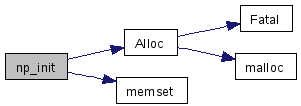
Definition at line 158 of file niceprintf.c.
References Alloc(), MAX_OUTPUT_SIZE, and memset().
Referenced by fileinit().
00159 {
00160         next_slot = output_buf = Alloc(MAX_OUTPUT_SIZE);
00161         memset(output_buf, 0, MAX_OUTPUT_SIZE);
00162         }
Here is the call graph for this function:
Here is the caller graph for this function:

| static void write_indent | ( | FILE * | fp, | |
| int | use_indent, | |||
| int | extra_indent, | |||
| char * | start, | |||
| char * | end | |||
| ) | [static] |
Definition at line 53 of file niceprintf.c.
References filename, in_define, ind, indent, last_was_newline, lineno, MAX_INDENT, MIN_INDENT, and sharp_line.
Referenced by ind_printf().
00055 {
00056     int ind, tab;
00057
00058     if (sharp_line) {
00059         fprintf(fp, "#line %ld \"%s\"\n", lineno, filename);
00060         sharp_line = 0;
00061         }
00062     if (in_define == 1) {
00063         in_define = 2;
00064         use_indent = 0;
00065         }
00066     if (last_was_newline && use_indent) {
00067         if (*start == '\n') do {
00068                 putc('\n', fp);
00069                 if (++start > end)
00070                         return;
00071                 }
00072                 while(*start == '\n');
00073
00074         ind = indent <= MAX_INDENT
00075                 ? indent
00076                 : MIN_INDENT + indent % (MAX_INDENT - MIN_INDENT);
00077
00078         tab = ind + extra_indent;
00079
00080         while (tab > 7) {
00081             putc ('\t', fp);
00082             tab -= 8;
00083         } /* while */
00084
00085         while (tab-- > 0)
00086             putc (' ', fp);
00087     } /* if last_was_newline */
00088
00089     while (start <= end)
00090         putc (*start++, fp);
00091 } /* write_indent */
Here is the caller graph for this function:

int cursor_pos = 0 [static] |
Definition at line 154 of file niceprintf.c.
| char filename[] |
Definition at line 81 of file format.c.
Referenced by C2F(), DeleteDirectory(), getfilenamehistory(), Load(), PrintPs(), Save(), SavePs(), write_indent(), and XmuLocatePixmapFile().
| int in_comment = 0 |
Definition at line 38 of file niceprintf.c.
Referenced by def_start(), ind_printf(), and write_indent().
Definition at line 155 of file niceprintf.c.
Definition at line 36 of file niceprintf.c.
Referenced by Check(), CheckCOLUMN(), CheckOptDim(), CheckOptSquare(), CheckROW(), CheckSCALAR(), CheckSquare(), CheckVECTOR(), CreCommon(), CreDIMFOREXT(), CreIMATRIX(), CrePOINTER(), CreSPARSE(), CreSTRINGMAT(), Generate(), GetCOLUMN(), GetCom(), GetIMATRIX(), GetPOINTER(), GetPOLYNOM(), GetROW(), GetSCALAR(), GetSPARSE(), GetSTRINGMAT(), GetVECTOR(), ind_printf(), OptMATRIX(), OptOpointer(), OutCommon(), OutExtBMATRIX1(), OutExtCommon(), OutExtIMATRIX(), OutExtPOLYNOM(), OutExtSPARSE(), OutExtSTRING(), OutExtSTRINGMAT(), OutIMATRIX(), OutLISTarg(), OutPOLYNOM(), OutSPARSE(), OutSTRINGMAT(), write_indent(), WriteArgCheck(), WriteCallConvertion(), WriteCallRest(), WriteCallRestCheck(), WriteCrossCheck(), WriteDeclaration(), WriteExternalVariableOutput(), WriteFortranCall(), WriteFunctionCode(), WriteHeader(), WriteInitDeclarations(), WriteListAnalysis(), WriteMain(), WriteMainHeader(), WriteOptArg(), WriteOptArgPhase2(), WriteOutput(), WriteVariable(), and WriteVariableOutput().
int last_was_newline = 0 [static] |
char* next_slot [static] |
Definition at line 150 of file niceprintf.c.
char* output_buf [static] |
Definition at line 149 of file niceprintf.c.
| int sharp_line = 0 |
char* string_start [static] |
Definition at line 151 of file niceprintf.c.
char* word_start = NULL [static] |
Definition at line 153 of file niceprintf.c.
 1.5.1
1.5.1