
#include <stdio.h>#include <string.h>#include "arith.h"Include dependency graph for uninit.c:
Go to the source code of this file.
Defines | |
| #define | TYSHORT 2 |
| #define | TYLONG 3 |
| #define | TYREAL 4 |
| #define | TYDREAL 5 |
| #define | TYCOMPLEX 6 |
| #define | TYDCOMPLEX 7 |
| #define | TYINT1 11 |
| #define | TYQUAD 14 |
| #define | Long long |
| #define | RNAN 0xff800001 |
| #define | DNAN0 1 |
| #define | DNAN1 0xfff00000 |
| #define | Void void |
| #define | FA7UL 0xfa7a7a7aUL |
Functions | |
| static void | ieee0 (Void) |
| void | _uninit_f2c (void *x, int type, long len) |
Variables | |
| static unsigned Long | rnan = RNAN |
| static unsigned Long | dnan0 = DNAN0 |
| static unsigned Long | dnan1 = DNAN1 |
| double | _0 = 0. |
| #define FA7UL 0xfa7a7a7aUL |
| #define TYQUAD 14 |
Definition at line 12 of file uninit.c.
Referenced by _uninit_f2c(), c_type_decl(), cktype(), consbinop(), consconv(), consnegop(), conspower(), conssgn(), data_value(), fix_entry_returns(), fold(), foldminmax(), intrcall(), is_negatable(), isnegative_const(), l_write(), lengtype(), lit_name(), LRget(), mkbitcon(), mkconv(), mkintqcon(), mkpower(), negate_const(), out_const(), p1_const(), p1get_const(), Pftype(), Ptype(), putconst(), putx(), retval(), setdata(), wr_array_init(), wr_equiv_init(), wr_output_values(), and zeroconst().
Definition at line 64 of file uninit.c.
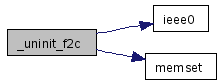
References dnan0, dnan1, FA7UL, first, ieee0(), Long, memset(), TYCOMPLEX, TYDCOMPLEX, TYDREAL, TYINT1, TYLONG, TYQUAD, TYREAL, and TYSHORT.
00066 {
00067         static int first = 1;
00068
00069         unsigned Long *lx, *lxe;
00070
00071         if (first) {
00072                 first = 0;
00073                 ieee0();
00074                 }
00075         if (len == 1)
00076          switch(type) {
00077           case TYINT1:
00078                 *(char*)x = 'Z';
00079                 return;
00080           case TYSHORT:
00081                 *(short*)x = 0xfa7a;
00082                 break;
00083           case TYLONG:
00084                 *(unsigned Long*)x = FA7UL;
00085                 return;
00086           case TYQUAD:
00087           case TYCOMPLEX:
00088           case TYDCOMPLEX:
00089                 break;
00090           case TYREAL:
00091                 *(unsigned Long*)x = rnan;
00092                 return;
00093           case TYDREAL:
00094                 lx = (unsigned Long*)x;
00095                 lx[0] = dnan0;
00096                 lx[1] = dnan1;
00097                 return;
00098           default:
00099                 printf("Surprise type %d in _uninit_f2c\n", type);
00100           }
00101         switch(type) {
00102           case TYINT1:
00103                 memset(x, 'Z', len);
00104                 break;
00105           case TYSHORT:
00106                 *(short*)x = 0xfa7a;
00107                 break;
00108           case TYQUAD:
00109                 len *= 2;
00110                 /* no break */
00111           case TYLONG:
00112                 lx = (unsigned Long*)x;
00113                 lxe = lx + len;
00114                 while(lx < lxe)
00115                         *lx++ = FA7UL;
00116                 break;
00117           case TYCOMPLEX:
00118                 len *= 2;
00119                 /* no break */
00120           case TYREAL:
00121                 lx = (unsigned Long*)x;
00122                 lxe = lx + len;
00123                 while(lx < lxe)
00124                         *lx++ = rnan;
00125                 break;
00126           case TYDCOMPLEX:
00127                 len *= 2;
00128                 /* no break */
00129           case TYDREAL:
00130                 lx = (unsigned Long*)x;
00131                 for(lxe = lx + 2*len; lx < lxe; lx += 2) {
00132                         lx[0] = dnan0;
00133                         lx[1] = dnan1;
00134                         }
00135           }
00136         }
Here is the call graph for this function:
| static void ieee0 | ( | Void | ) | [static] |
Definition at line 376 of file uninit.c.
Referenced by _uninit_f2c().
Here is the caller graph for this function:

unsigned Long dnan0 = DNAN0 [static] |
unsigned Long dnan1 = DNAN1 [static] |
 1.5.1
1.5.1